
ENGINEERING CASE STUDY
SPARTA TILT & LOAD
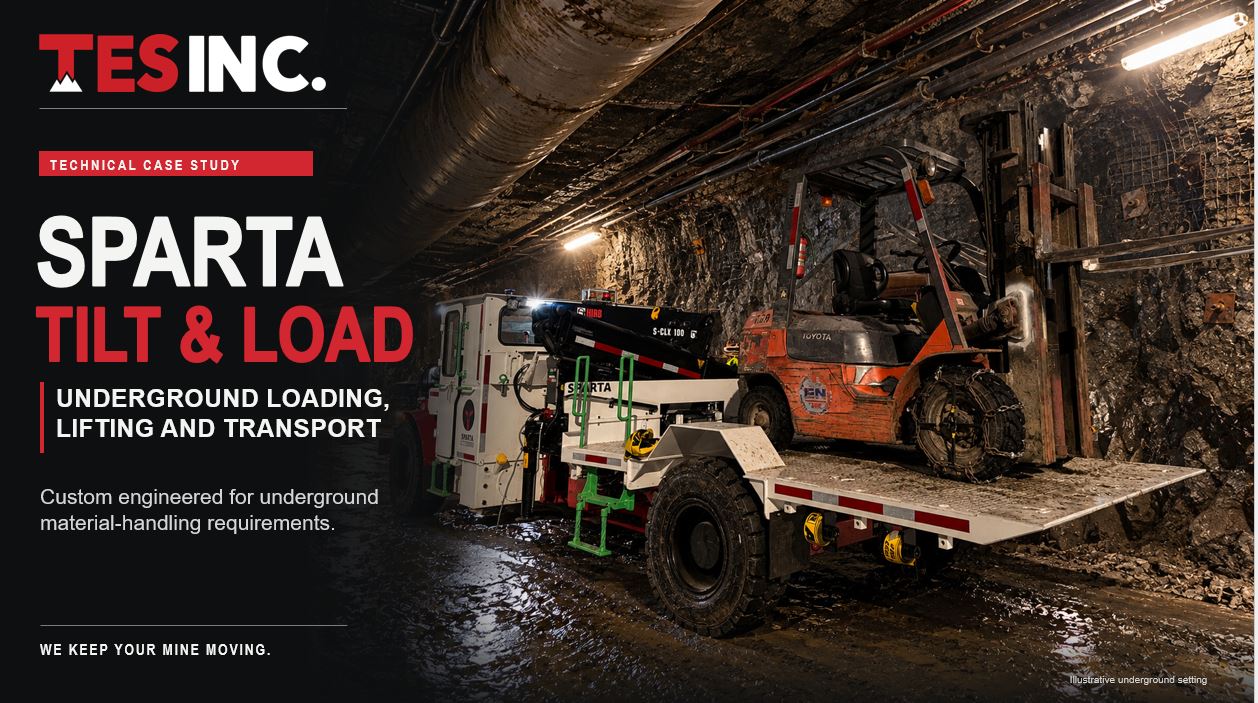
Developed around an underground mine’s waste-bin handling needs, the SPARTA Tilt & Load combines a tilting deck, integrated winch and HIAB crane. This case study examines the original equipment requirement, the engineering configuration and its subsequent applications..
THE ORIGINAL UNDERGROUND HANDLING REQUIREMENT
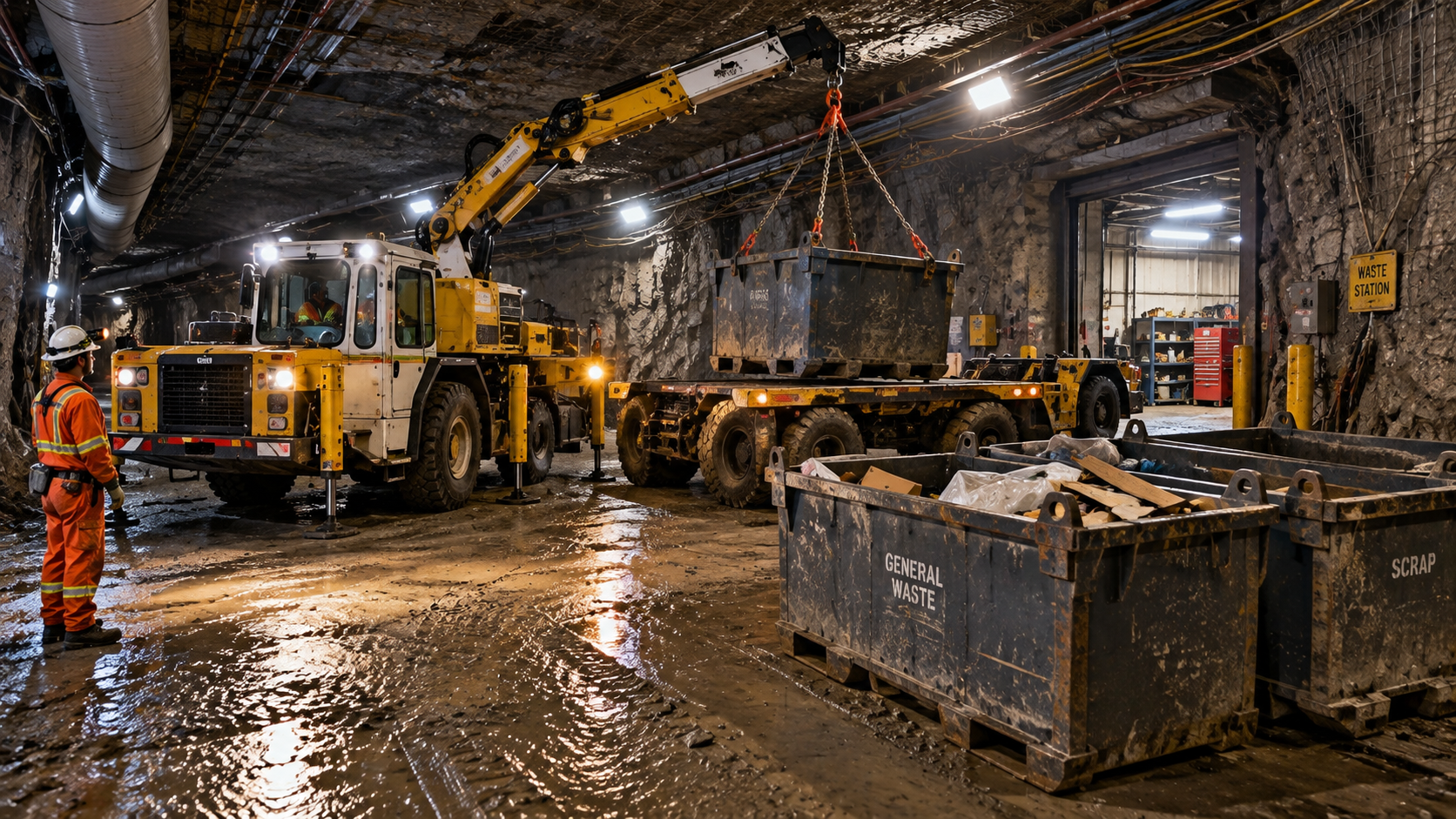
An underground mine approached TES Inc. about purchasing a boom truck. During the equipment discussion, the mine identified a recurring need to move waste bins underground.
These movements frequently involved a boom truck and a second vehicle. Completing the work depended on the availability and coordination of both machines. The mine wanted a loading and transport arrangement that reduced this dependency while retaining crane-assisted lifting and positioning.
TES therefore assessed the complete material movement, rather than the boom-truck requirement alone. The resulting configuration incorporated a loading method and transport deck within the SPARTA vehicle.
EQUIPMENT CONFIGURATION
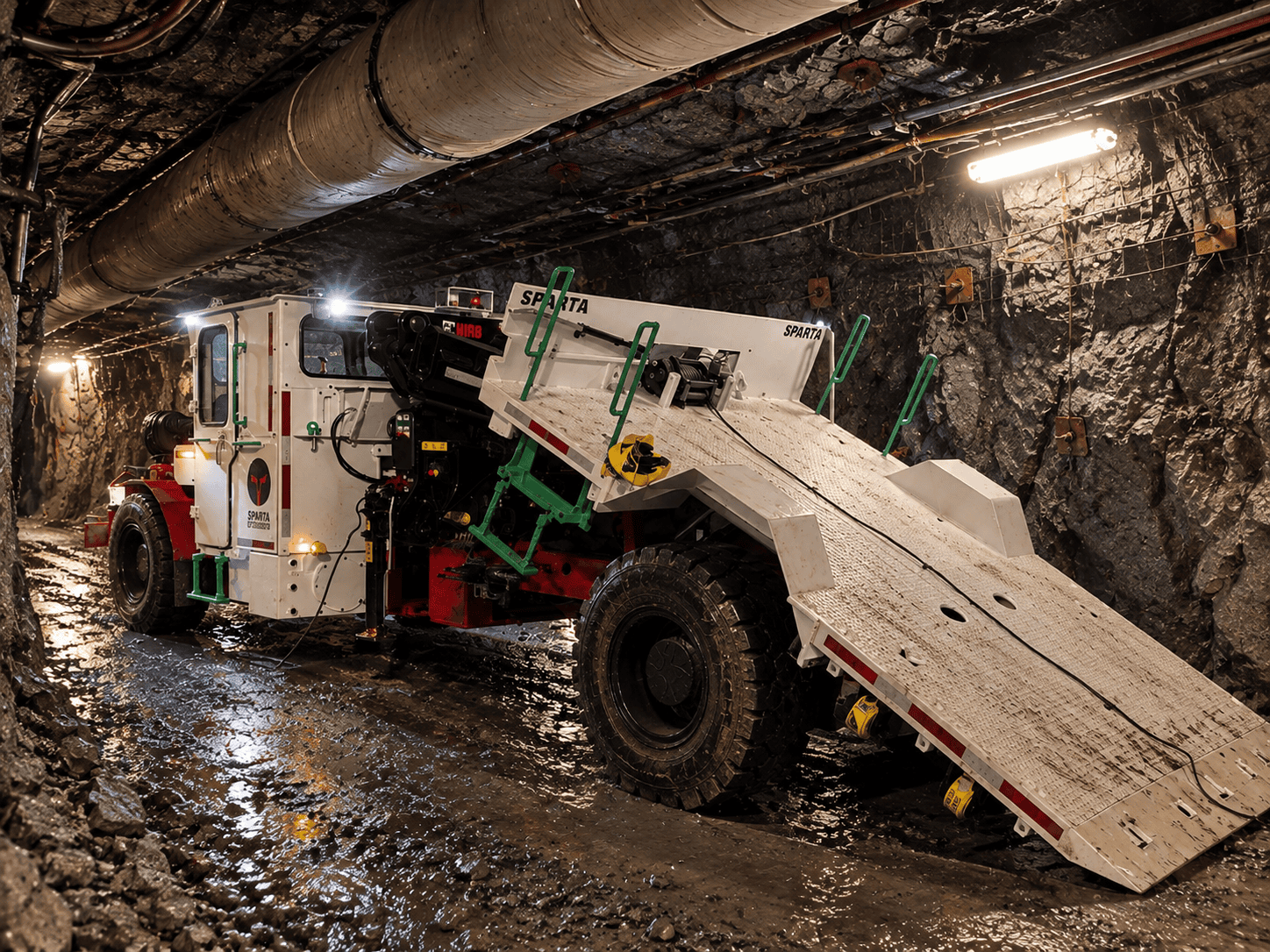
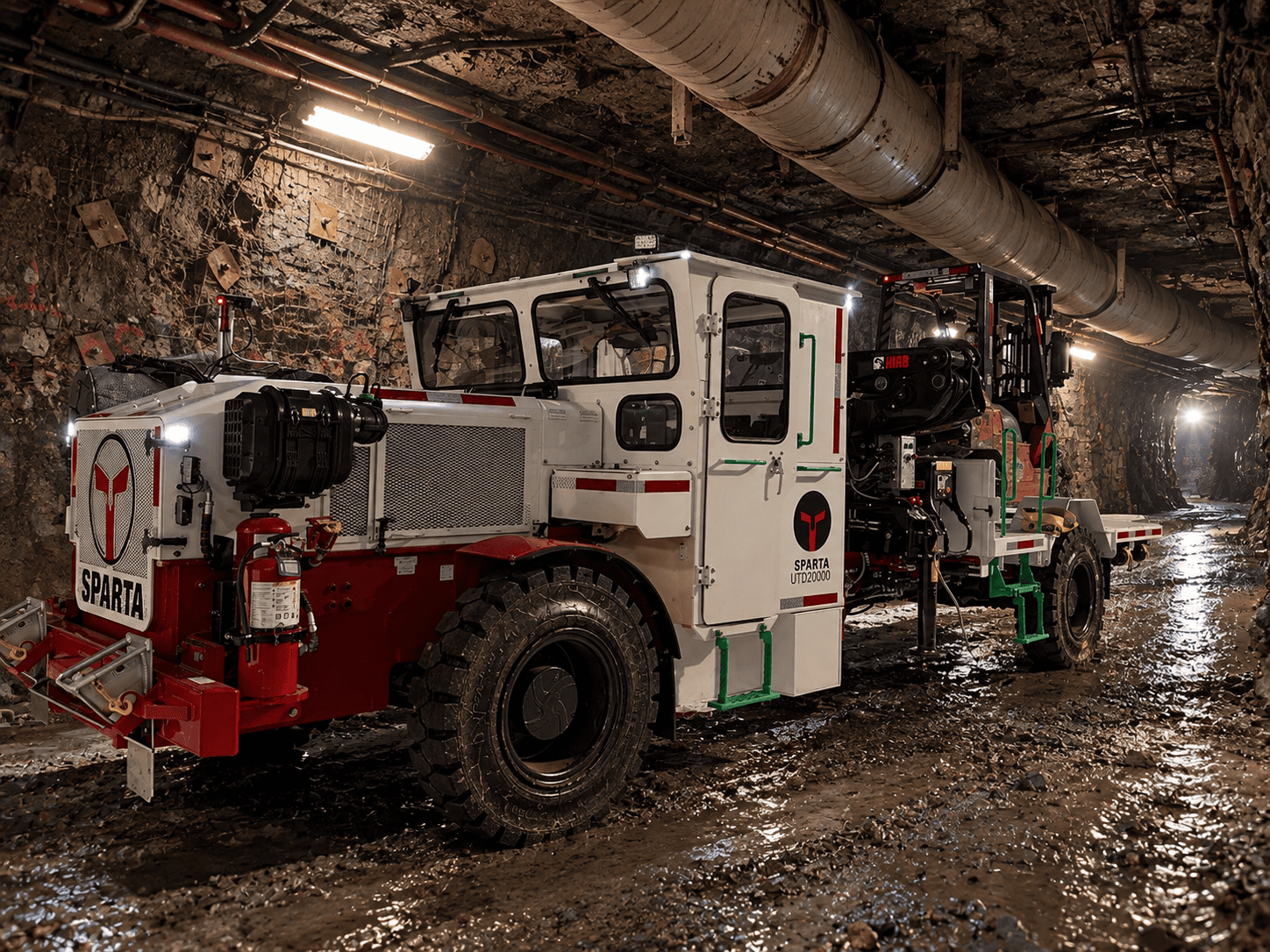
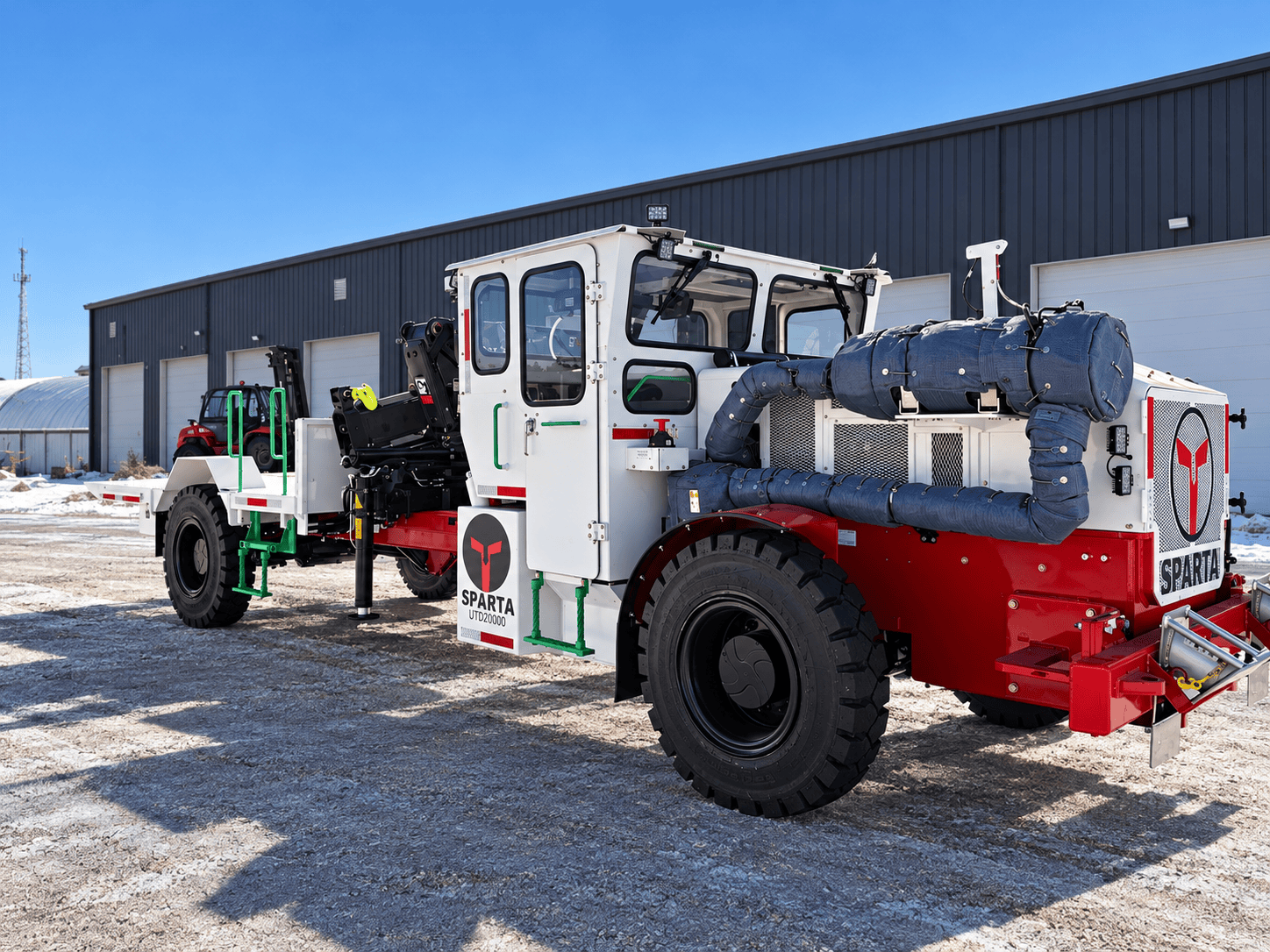
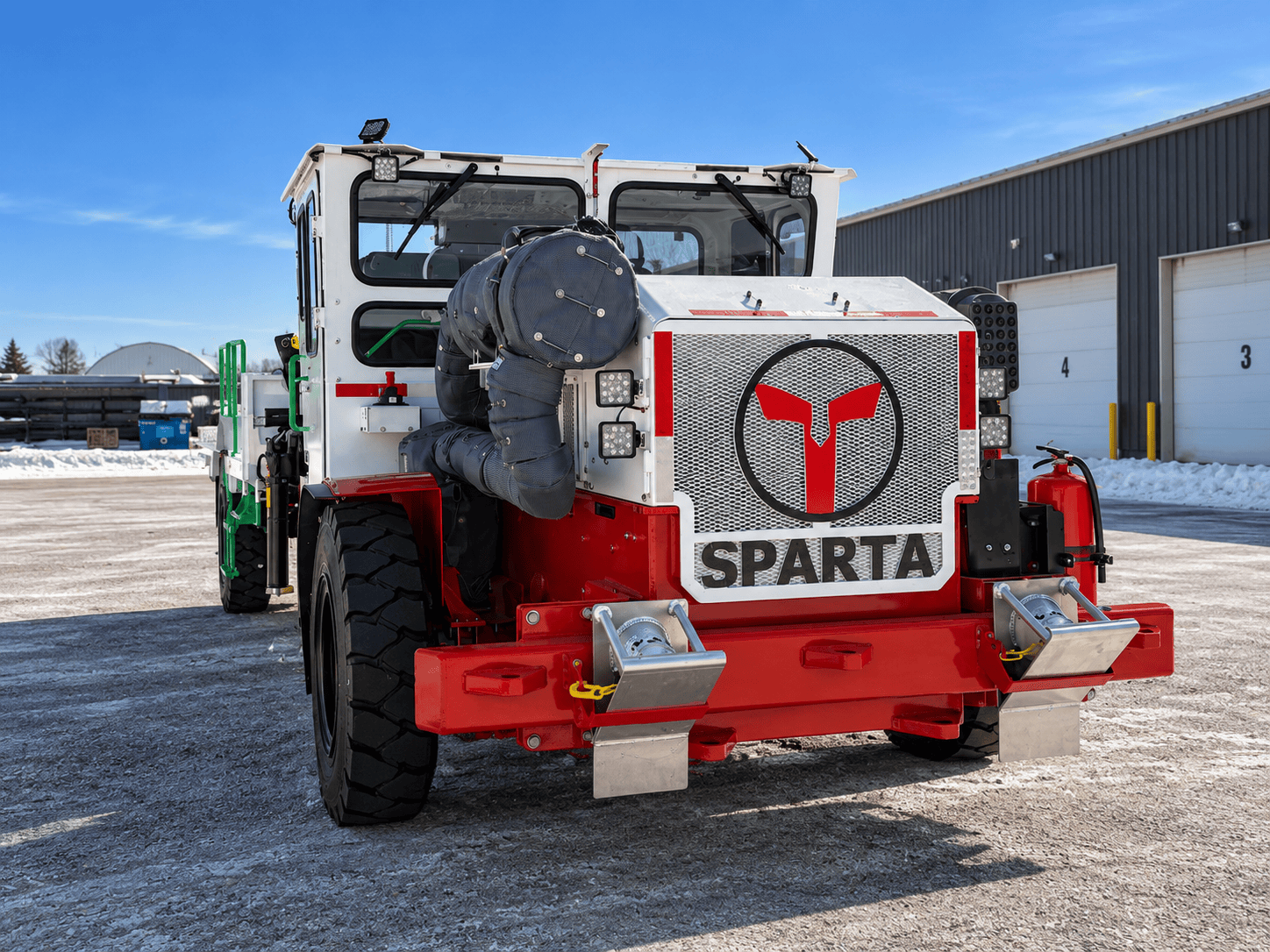
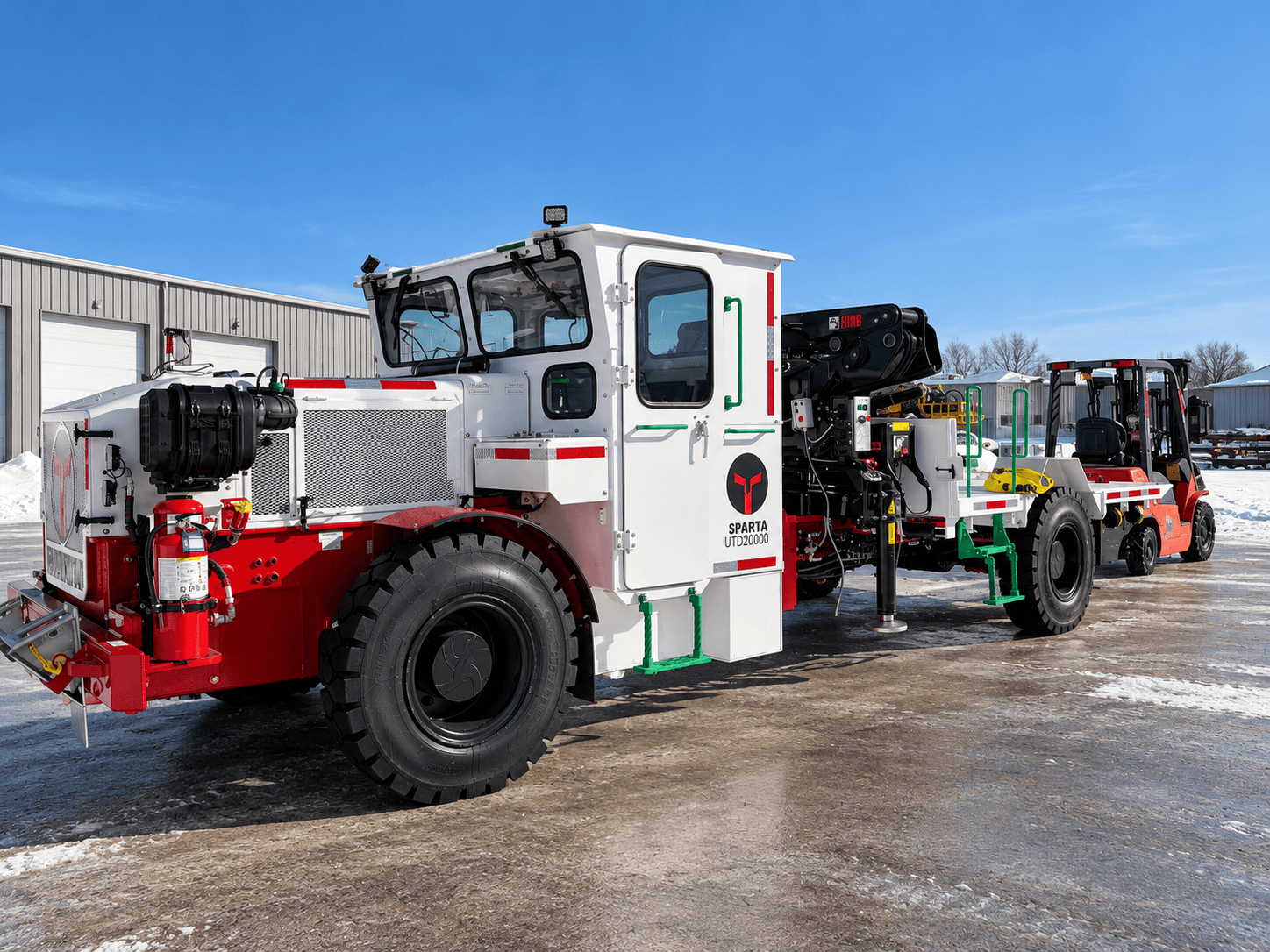
TES developed the Tilt & Load using its existing SPARTA articulated carrier. The configuration combines a rear tilt deck, integrated winch and HIAB crane.
The deck-loading system and crane provide different handling methods. Their functions are integrated within one vehicle, but their capacities and operating conditions remain separate. Tilt & Load Case Study
EQUIPMENT ENGINEERING
SYSTEM INTEGRATION AND OPERATING LIMITS
The TES assembly brings together the rear deck, winch, crane installation and hydraulic systems. The engineering drawing also identifies separate deck safety and lift interlock systems.
These systems support distinct operating functions. The winch and inclined deck provide the loading arrangement. The level deck supports secured transport. The crane provides lifting and positioning within its applicable capacity limits.
Crane lifting capacity must not be interpreted as deck payload. The case study separates these references and identifies the source drawings and manufacturer data used to describe the configuration.
EQUIPMENT ENGINEERING
DEPLOYMENT AND ADDITIONAL APPLICATIONS
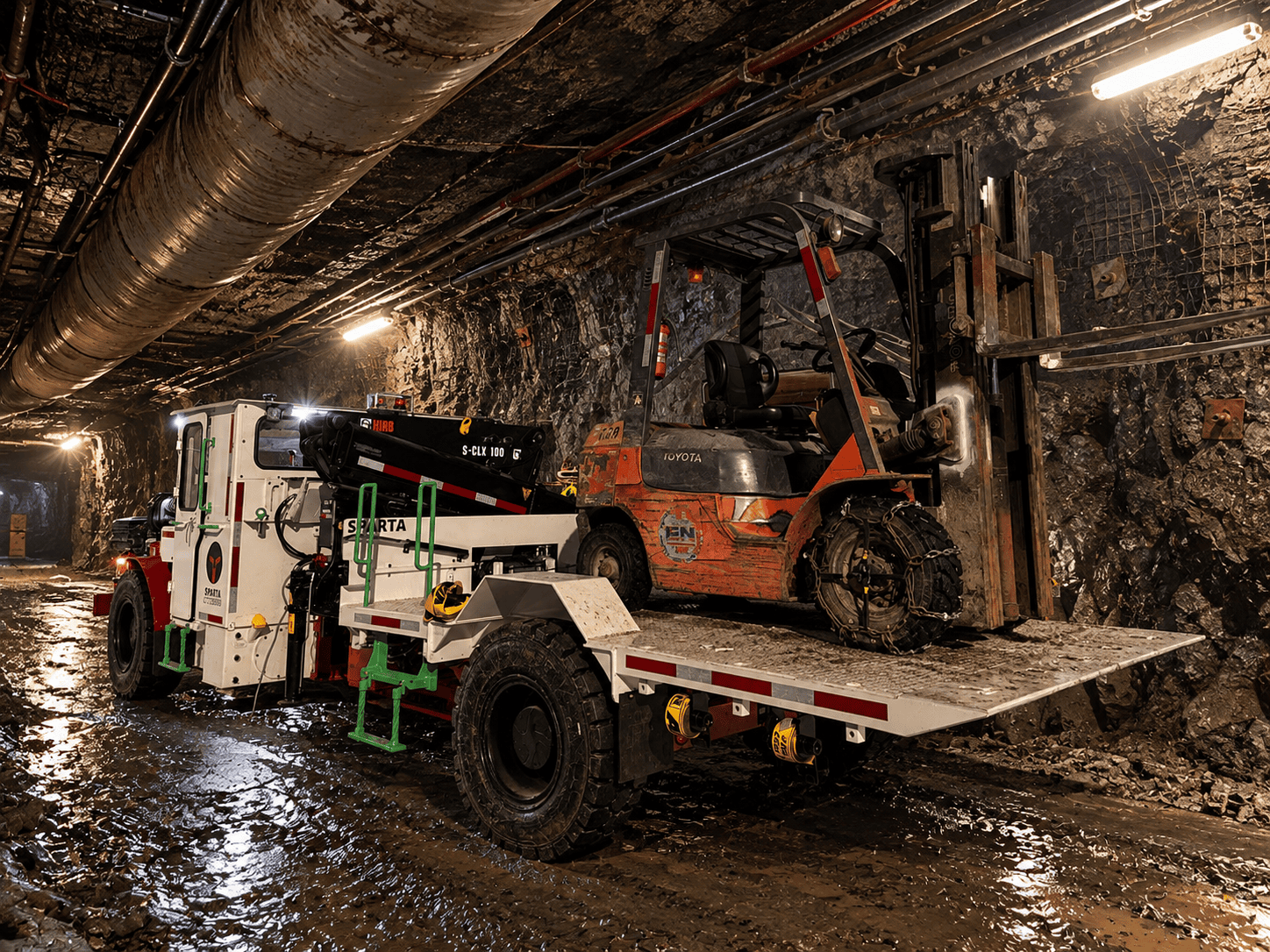
The original application was the movement of waste bins underground. The mine purchased multiple units and extended their use to other material-handling needs.
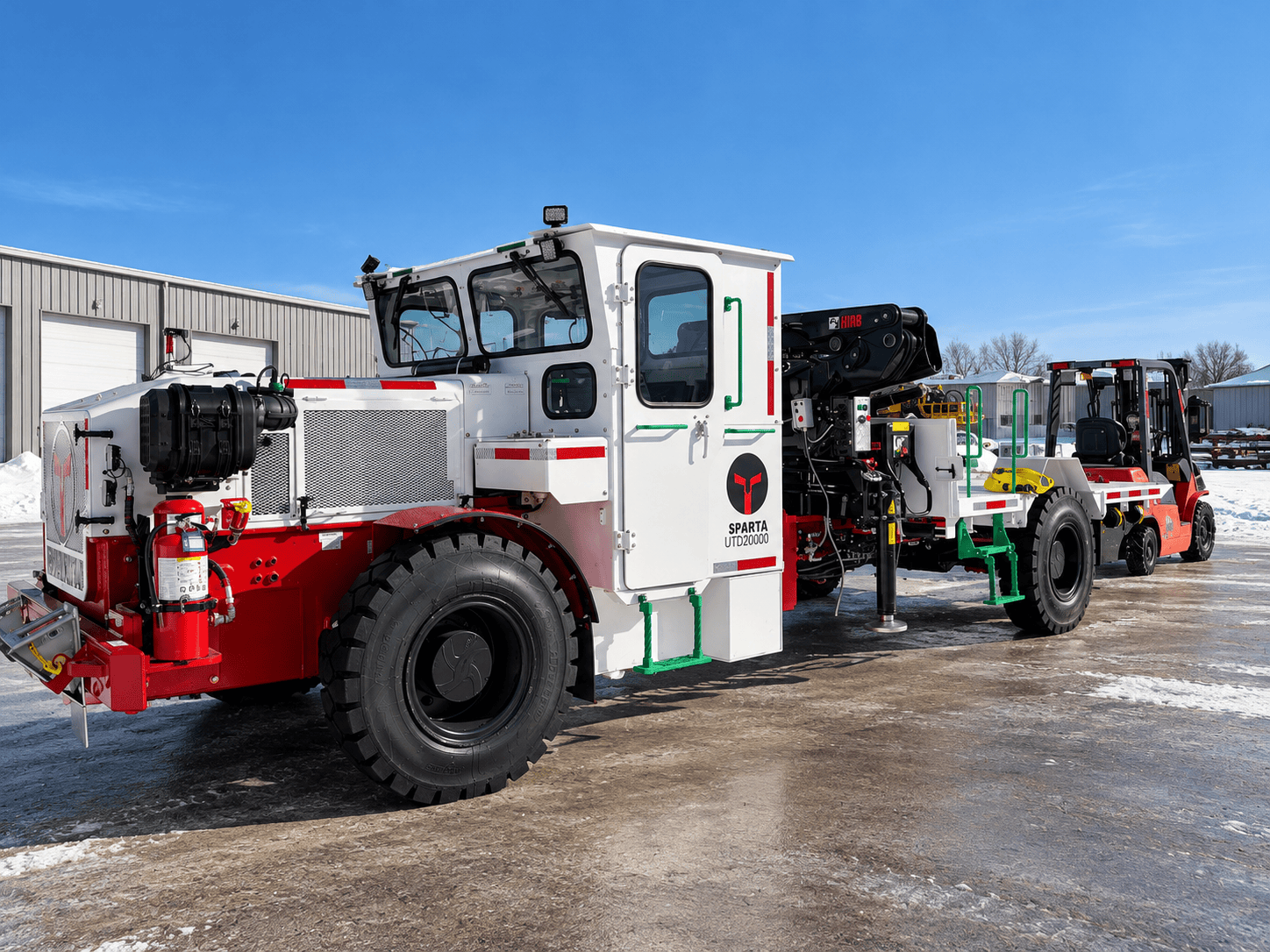
Reported applications include transporting disabled forklifts and other equipment. This broadened the use of the vehicle beyond the initial bin-handling requirement.
The project establishes multiple-unit purchasing and additional reported applications. It does not establish a measured reduction in handling time, operating cost or total fleet size. Those outcomes have not been quantified.
ASSESSING THE CONFIGURATION FOR ANOTHER MINE
The relevant question is whether the vehicle can complete the required movement with the intended load and available working space.
Combining loading, transport and lifting functions can change equipment allocation for suitable tasks. Fleet requirements still depend on concurrent work, equipment availability and the limits of the installed systems.
DOWNLOAD THE SPARTA TILT & LOAD CASE STUDY
Review the original mine requirement, equipment integration, loading and transport configurations, HIAB capacity references and underground operating envelope. The case study includes TES engineering drawings and the reported expansion from waste-bin handling to disabled-equipment transport. study includes TES engineering drawings and the reported expansion from waste-bin handling to disabled-equipment transport.
DISCUSS AN EQUIPMENT REQUIREMENT
Describe the material or equipment you need to move, the current handling arrangement and the underground access constraints. Include known load weights, dimensions and the functions the vehicle.