
ENGINEERING CASE STUDY
SPARTA NARROW VEIN SCISSOR LIFT
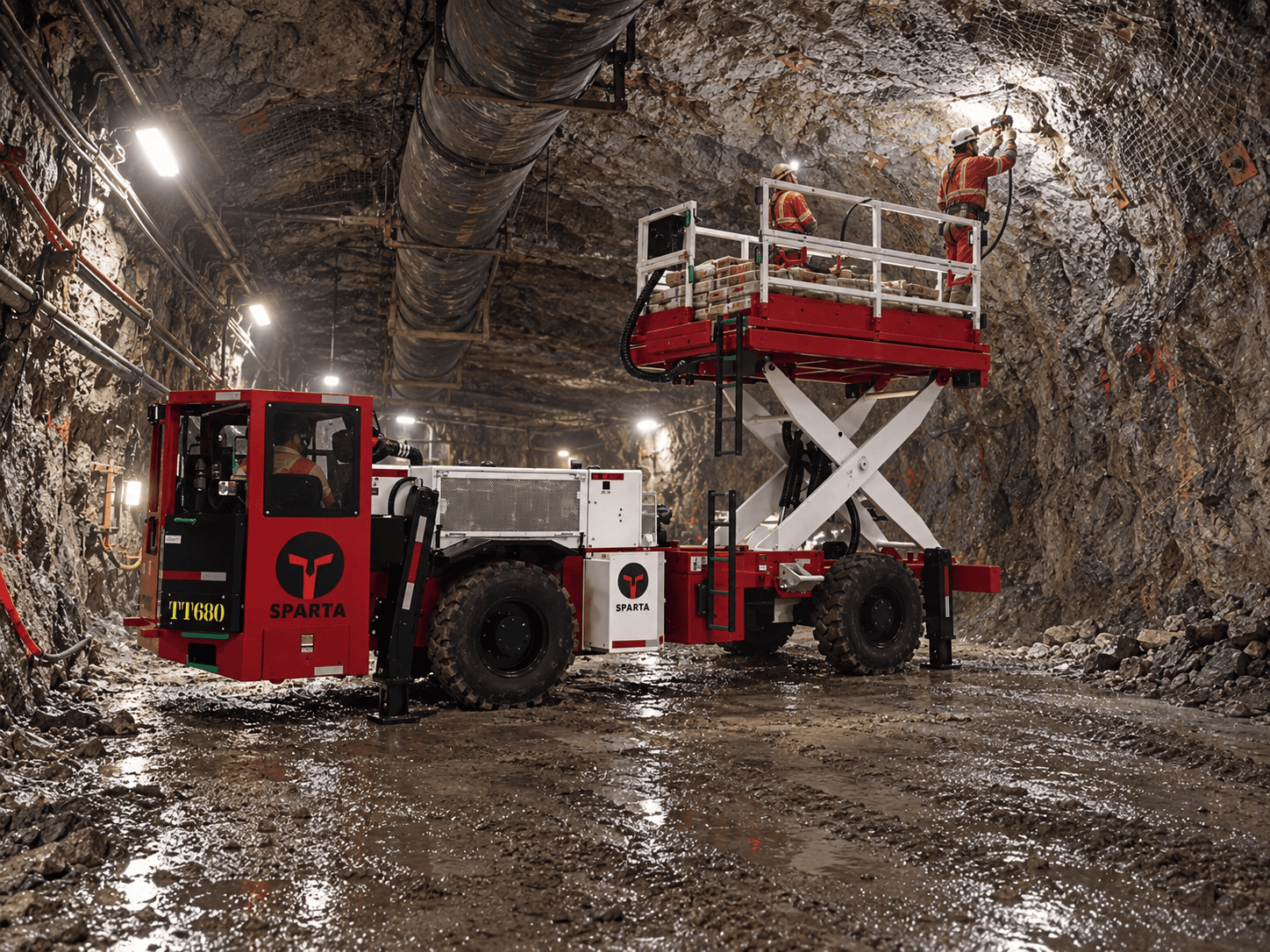
Custom-built for a distributor serving mines in Mexico, the SPARTA Narrow Vein Scissor Lift combines a narrow articulated carrier with elevated access. This case study examines the USLNV5000 configuration, operating envelopes and wider utility-fleet development.
THE ORIGINAL UNDERGROUND HANDLING REQUIREMENT
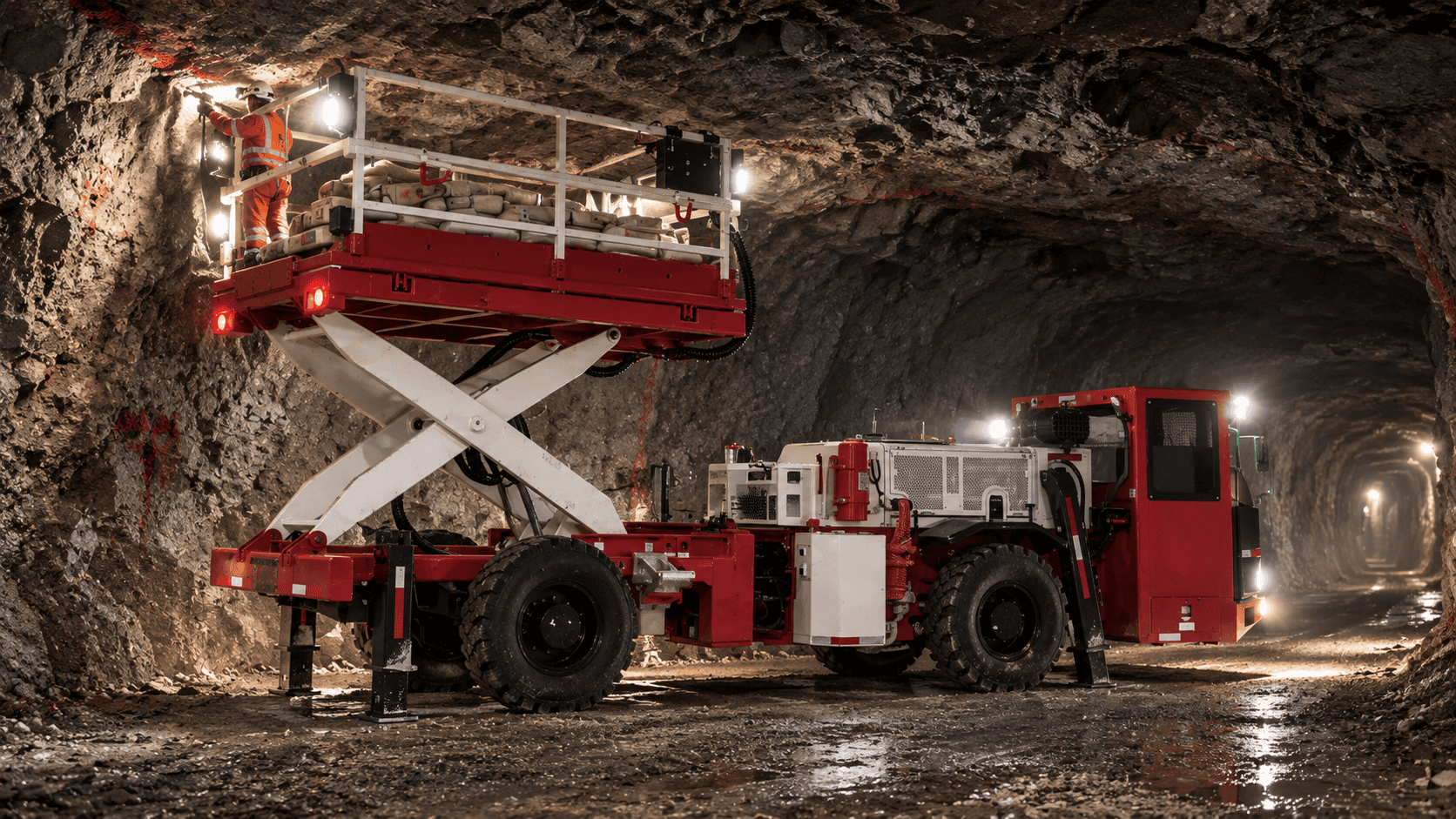
A distributor serving mines in Mexico required SPARTA utility vehicles in narrow-vein configurations. TES custom-built the USLNV5000 scissor lift as part of this wider equipment-development project.
The scissor lift needed to combine restricted underground access with the platform capacity and positioning required for elevated work. Vehicle width and turning geometry addressed the route to the work area. Platform movement and stabilization determined the space needed once positioned.
The engineering requirement therefore extended beyond a narrower carrier. The complete vehicle had to be assessed in its lowered and elevated configurations against the mine’s travel and working constraints.
EQUIPMENT CONFIGURATION
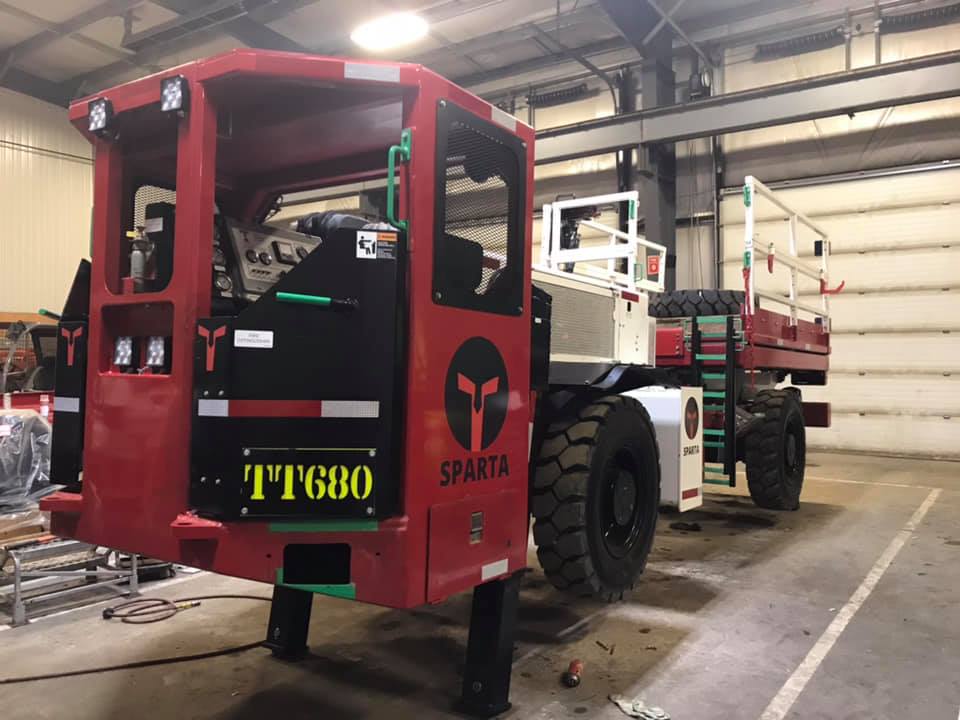
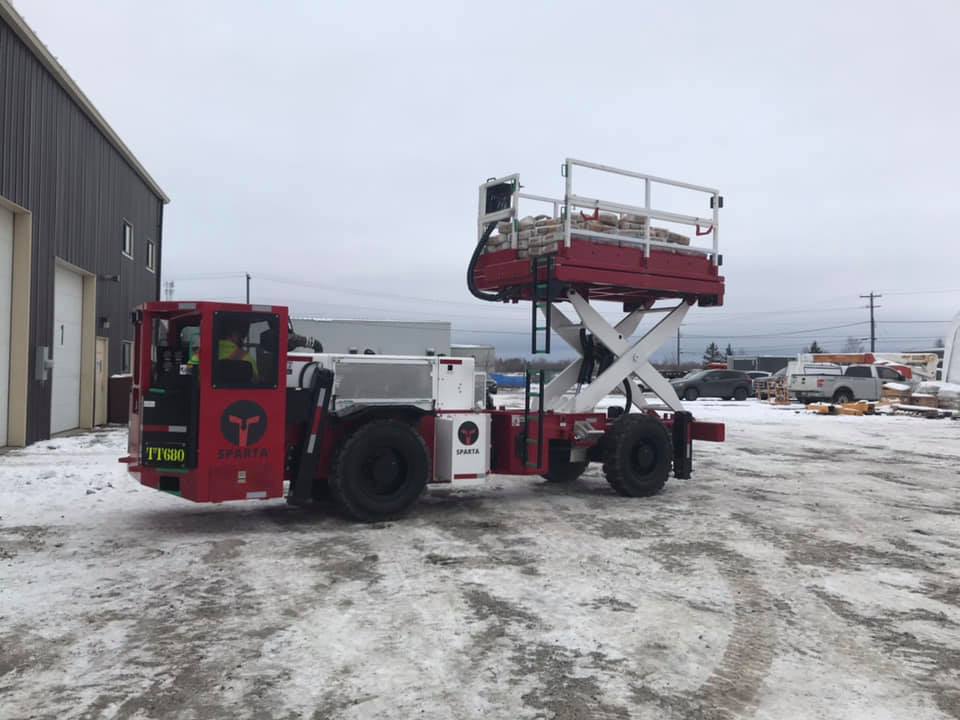
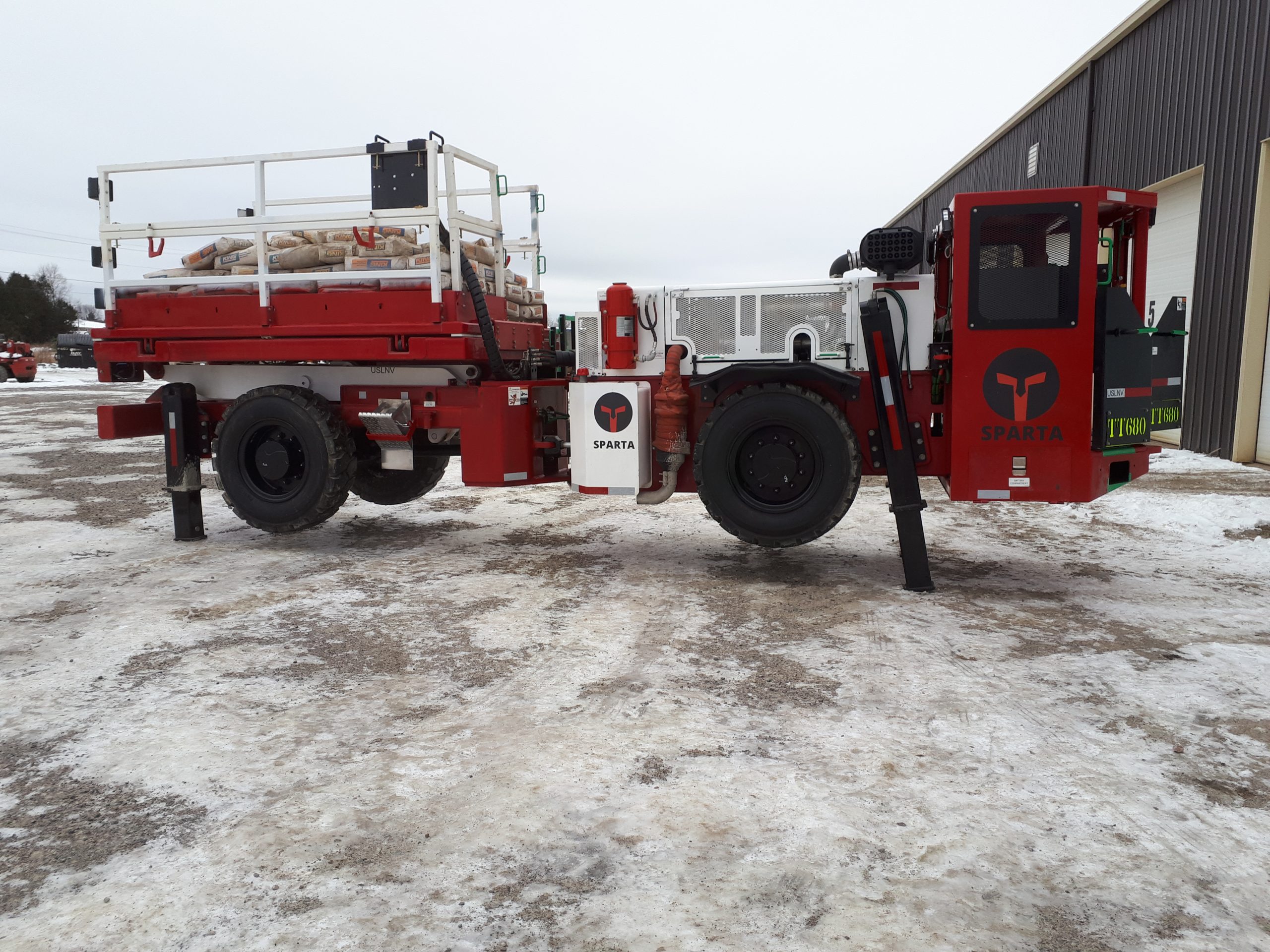
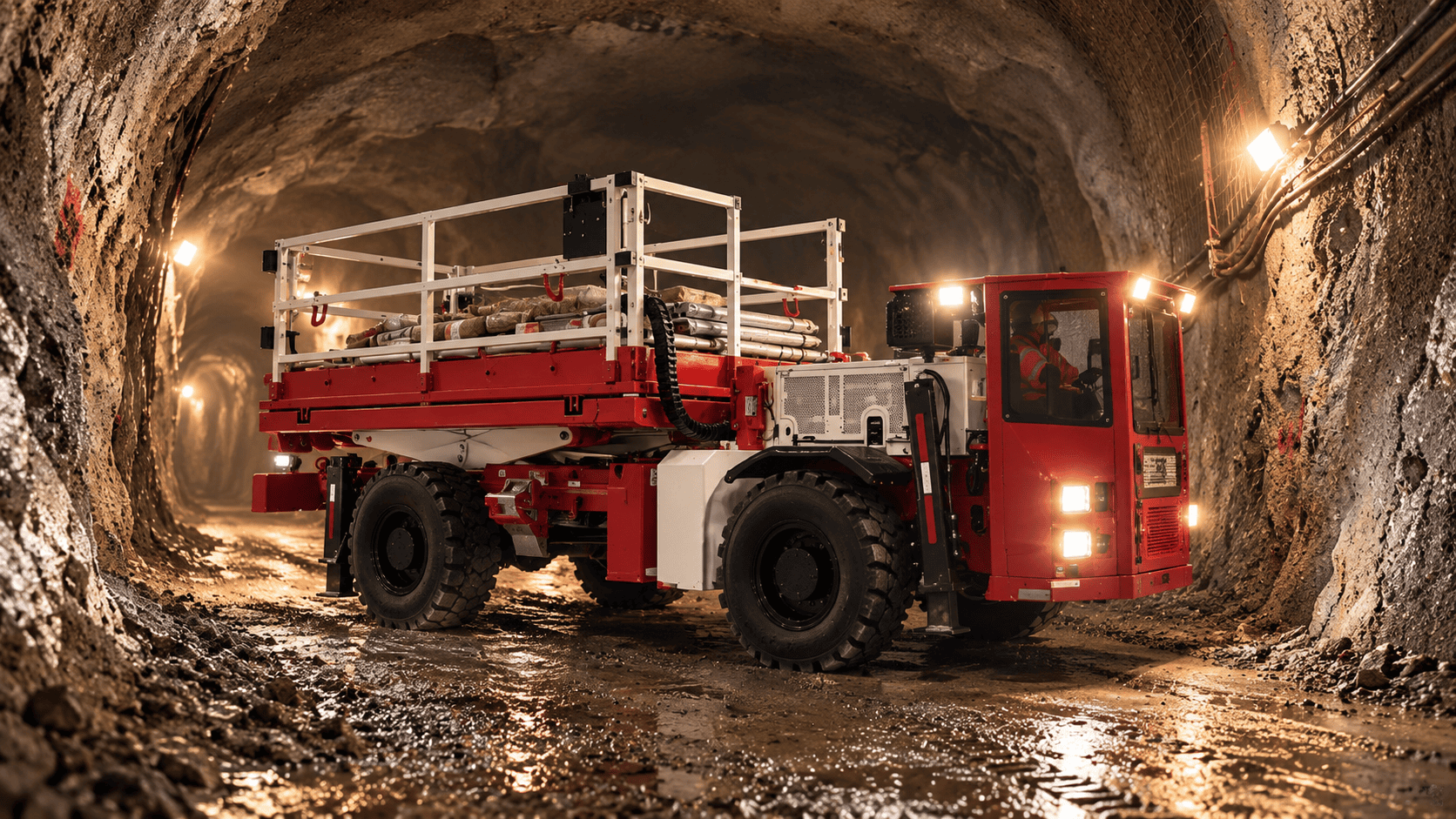
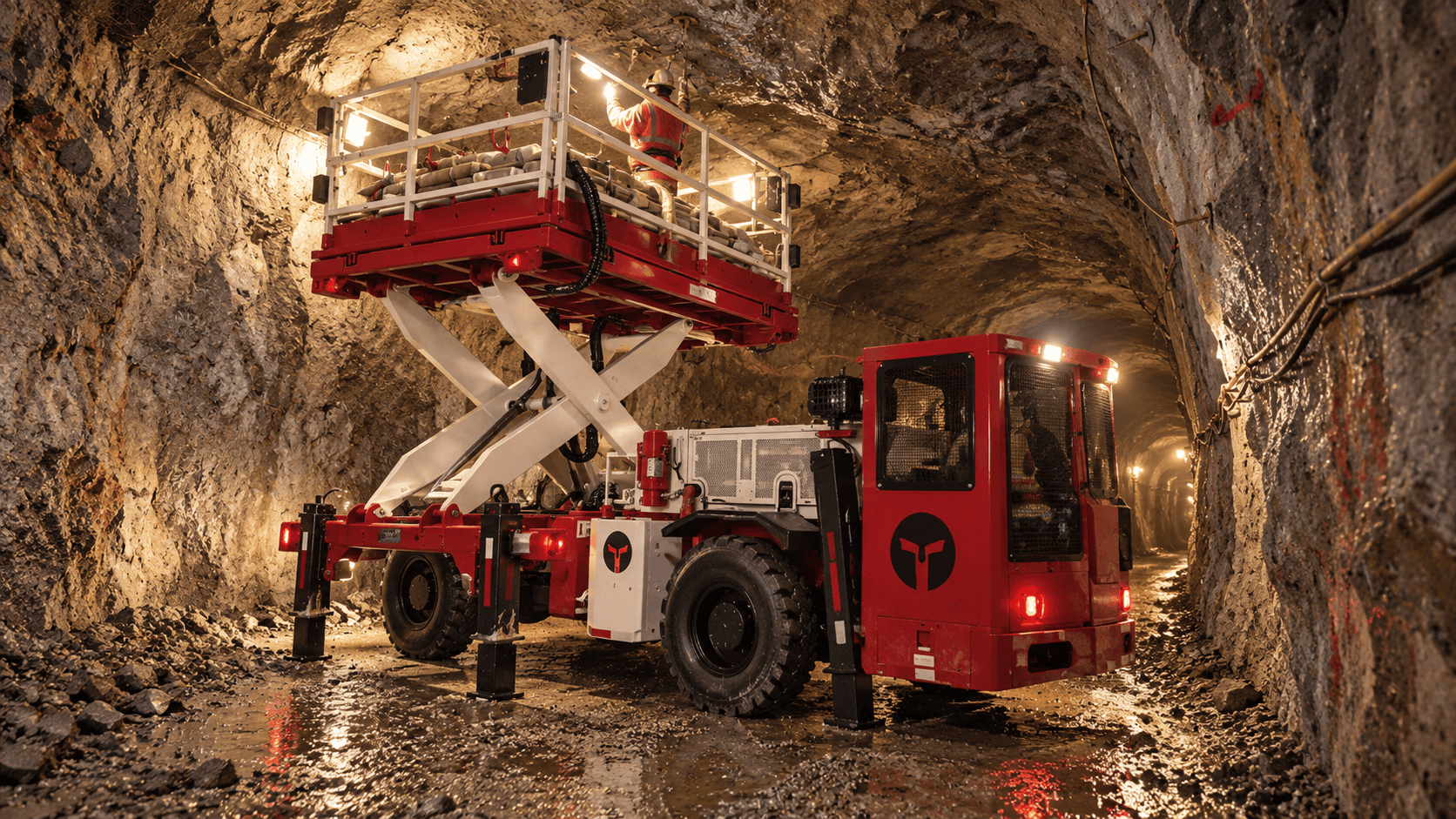
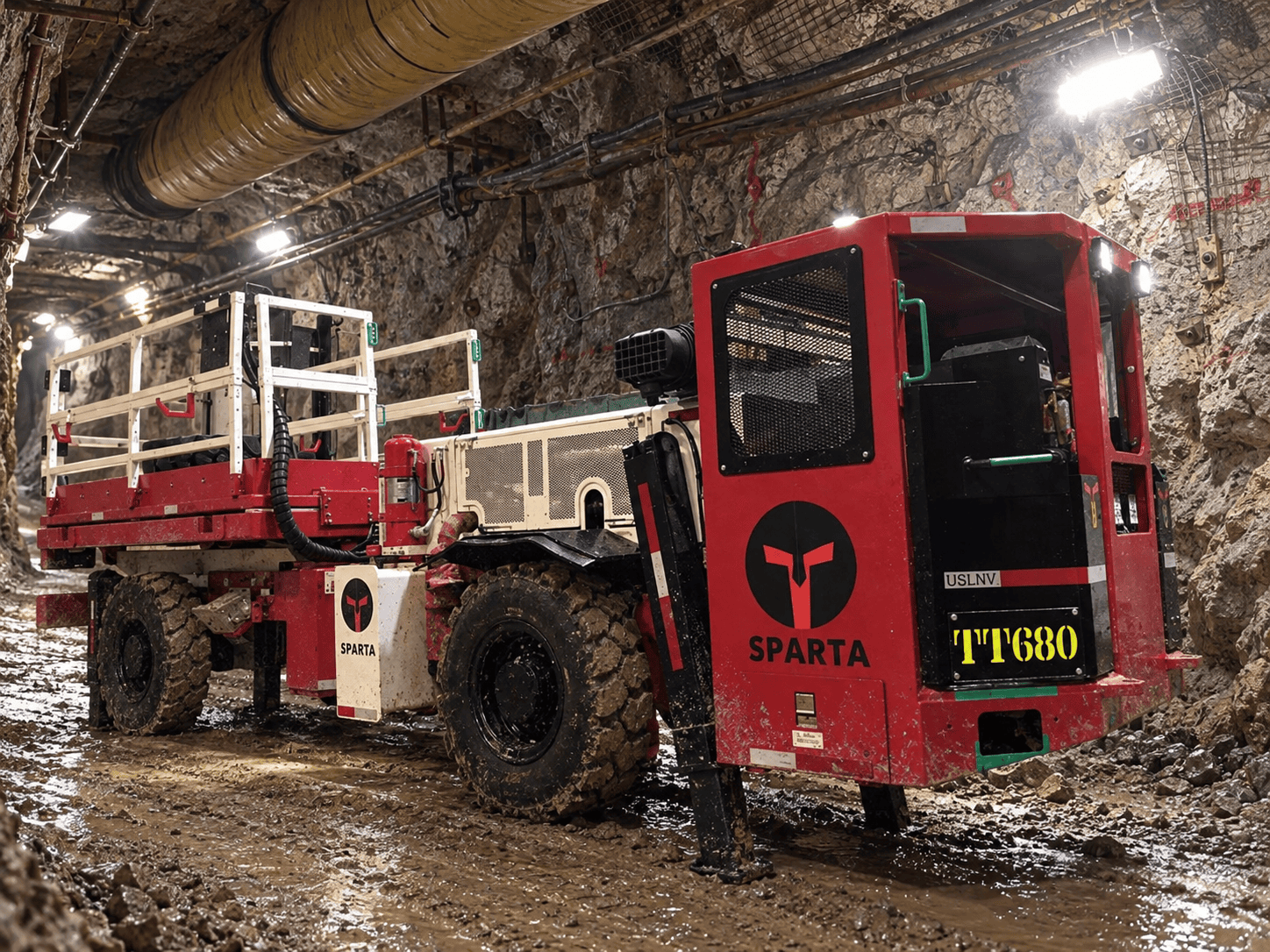
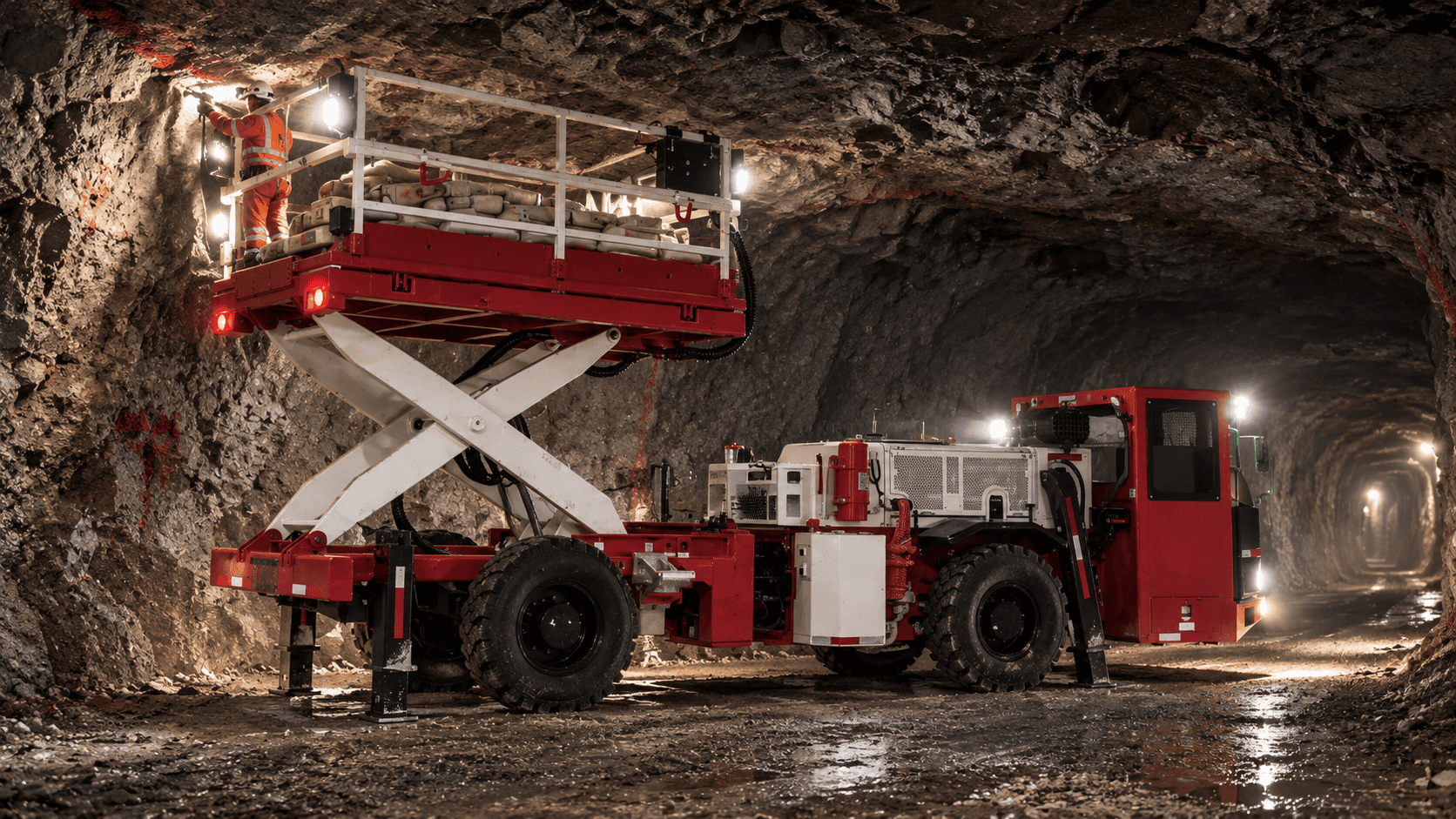
The USLNV5000 combines a four-wheel-drive articulated carrier with a rear scissor platform. Platform side shift and four independent outriggers form part of the narrow-vein configuration.
The carrier provides underground mobility. The scissor assembly provides elevated access, with lateral adjustment and stabilization assessed for the intended work position.
EQUIPMENT ENGINEERING
TRAVEL CLEARANCE AND WORKING ENVELOPE
TES drawings distinguish a vehicle width of 1.805 m from 1.924 m with optional fenders. These are drawing references. Route assessment must consider the complete fitted configuration rather than a nominal chassis width alone.
With the platform lowered, the cab, railings and fitted equipment define the travel envelope. At the work area, platform elevation, lateral side shift and outrigger deployment change the space required.
Both configurations must be assessed against the opening and installed mine services. A vehicle that can reach a work area does not necessarily have sufficient space to raise and position the platform.
EQUIPMENT VIDEOS
NARROW-VEIN UTILITY FLEET DEVELOPMENT
TES designed a wider range of SPARTA narrow-vein utility vehicles for mines served by the distributor in Mexico. The scissor lift was one configuration within that programme.
The common requirement was equipment suited to restricted underground access. Vehicle dimensions, load capacity and working space remained specific to the function of each utility vehicle.
The documented outcome is a custom-built scissor lift and a wider narrow-vein utility-vehicle design programme. Operating-performance improvements have not been quantified.
ASSESSING THE CONFIGURATION FOR ANOTHER MINE
The relevant question is whether the vehicle can reach the underground work area and provide the required elevated access within the available space.
Carrier dimensions, turning geometry, platform capacity, side shift and stabilization must be considered together. A narrower carrier alone does not establish suitability for the intended task or opening.
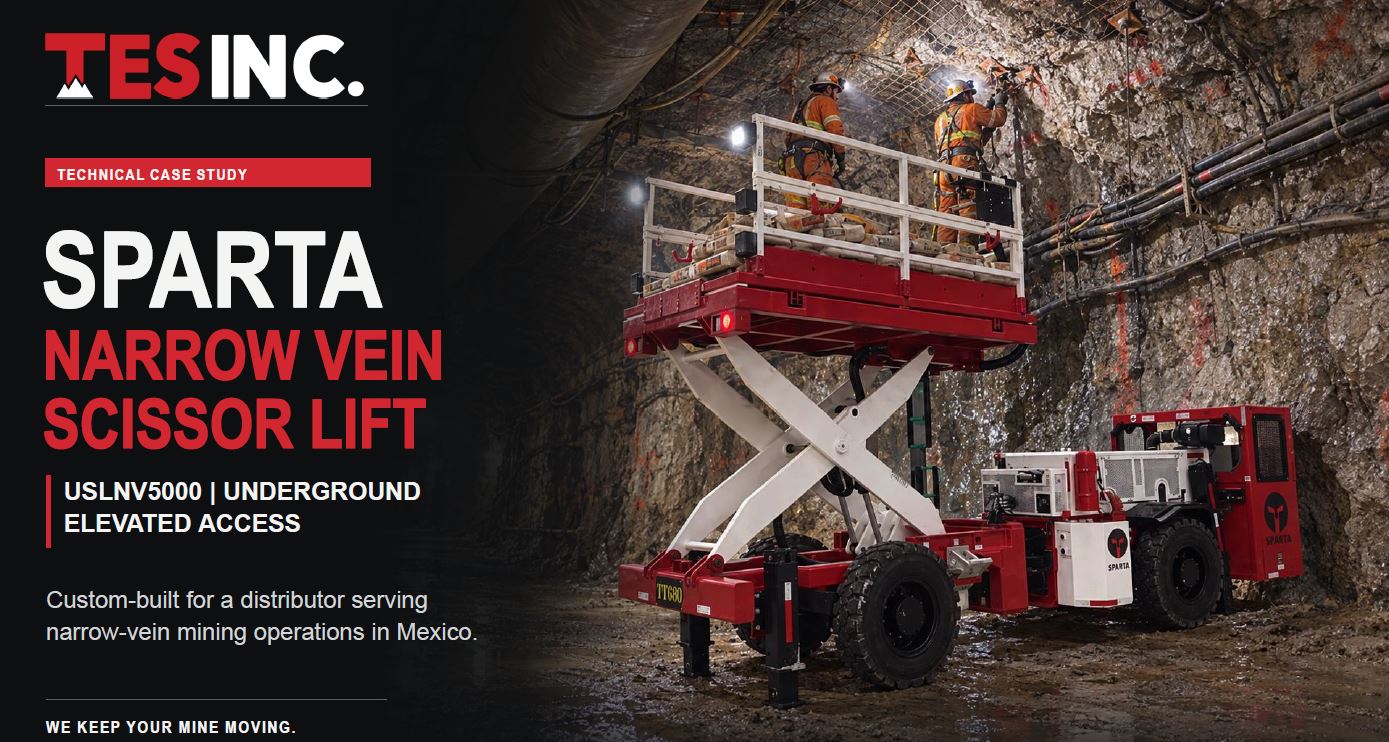
DOWNLOAD THE NARROW VEIN CASE STUDY
Review the original equipment requirement, articulated carrier, scissor assembly, platform capacity and operating configurations. The case study includes original TES dimensional and turning drawings, reference specifications and the wider narrow-vein fleet-development context.
DISCUSS AN EQUIPMENT REQUIREMENT
Describe the material or equipment you need to move, the current handling arrangement and the underground access constraints. Include known load weights, dimensions and the functions the vehicle.