
ENGINEERING CASE STUDY
SPARTA DOUBLE SCISSOR
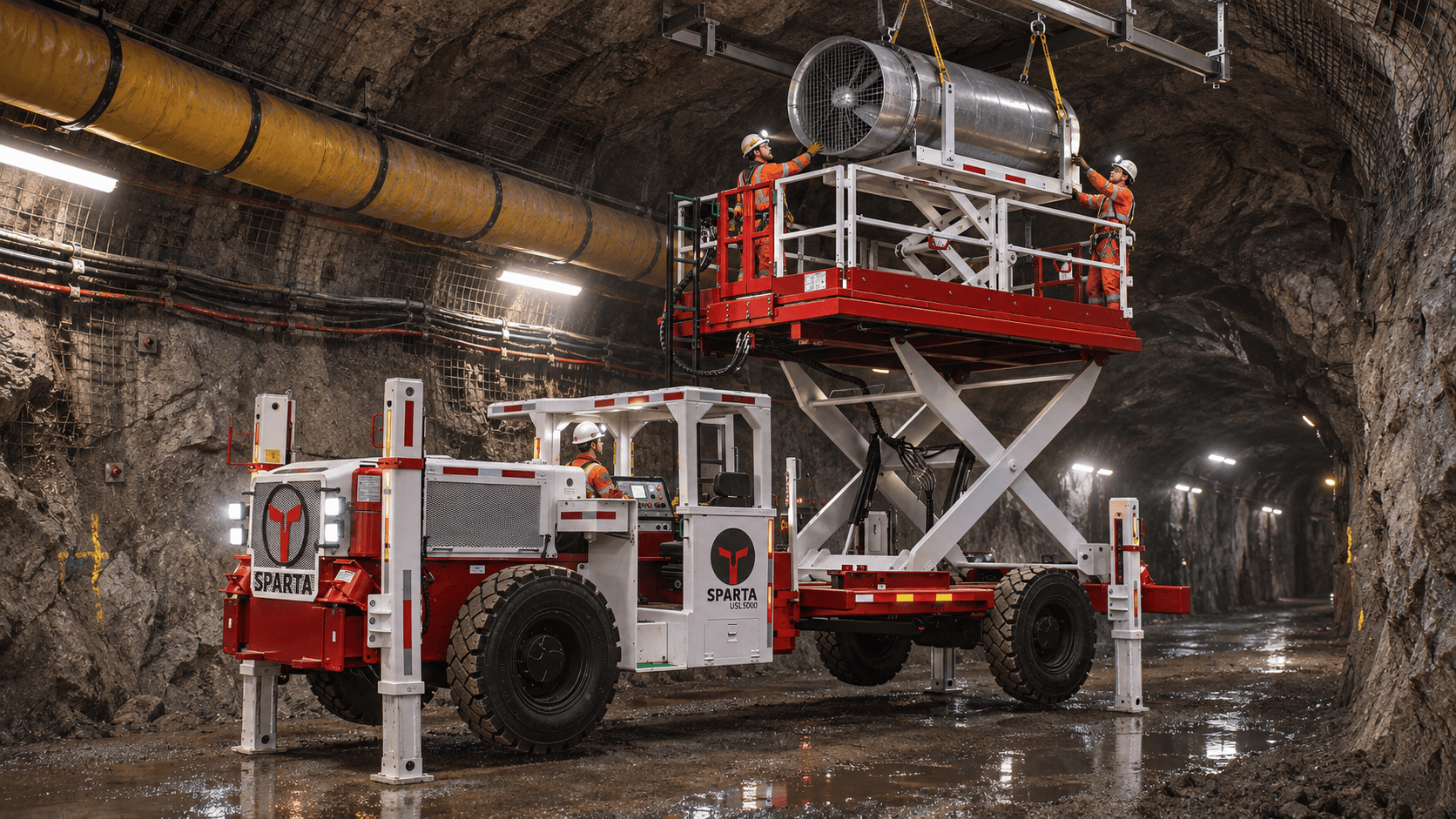
Developed for an underground mine’s installation requirements, the SPARTA Double Scissor combines an elevated work platform with a secondary component lift. This case study examines the custom equipment configuration, fan and pipe-handling applications, and the engineering considerations involved in underground installation work.
THE ORIGINAL UNDERGROUND INSTALLATION REQUIREMENT
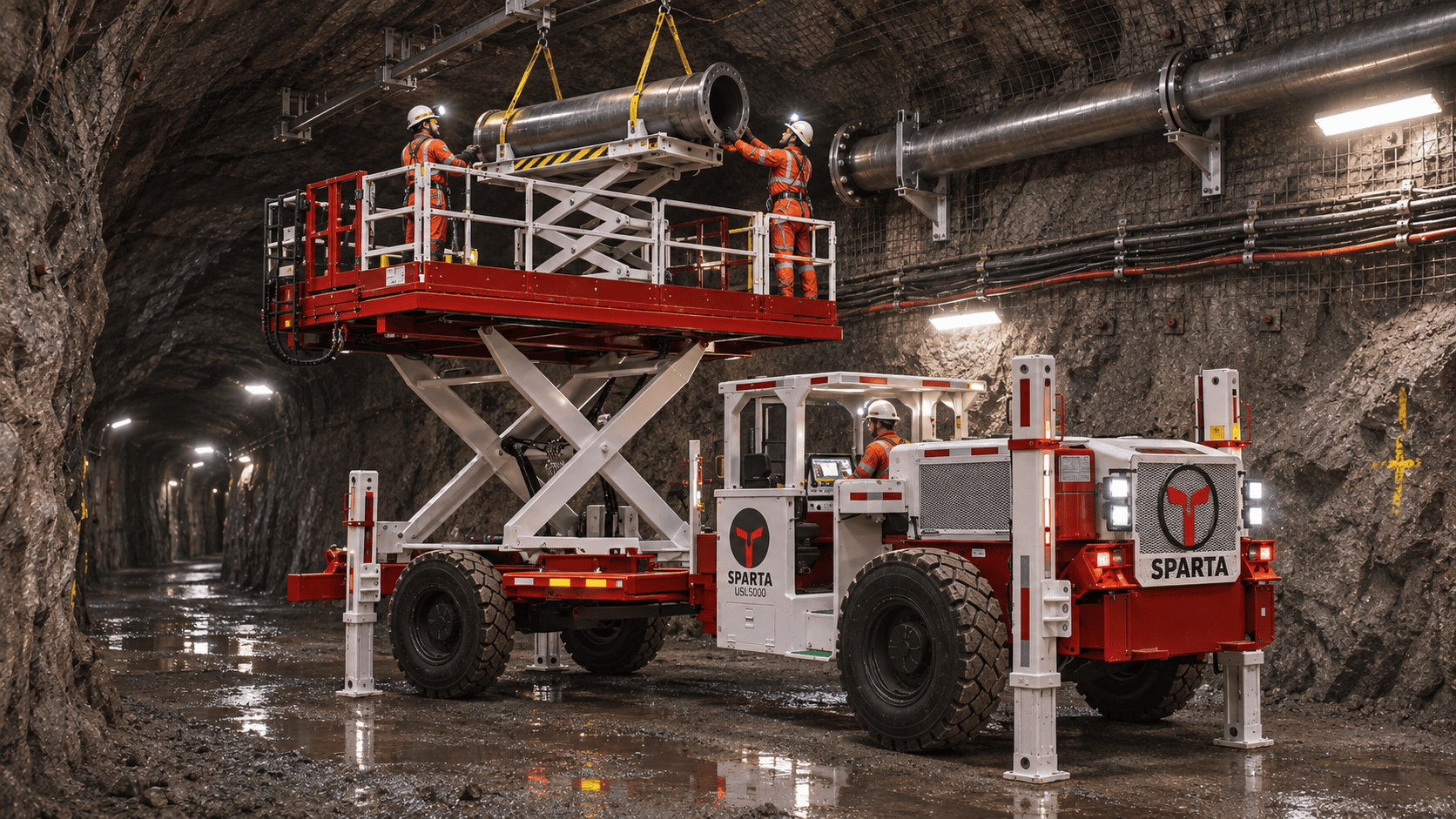
An underground mine required equipment to provide elevated access while assisting with the installation of components such as ventilation fans and piping.
Conventional scissor lifts raise personnel and materials together on the same platform. This application required additional movement of the supported component relative to the crew’s working elevation.
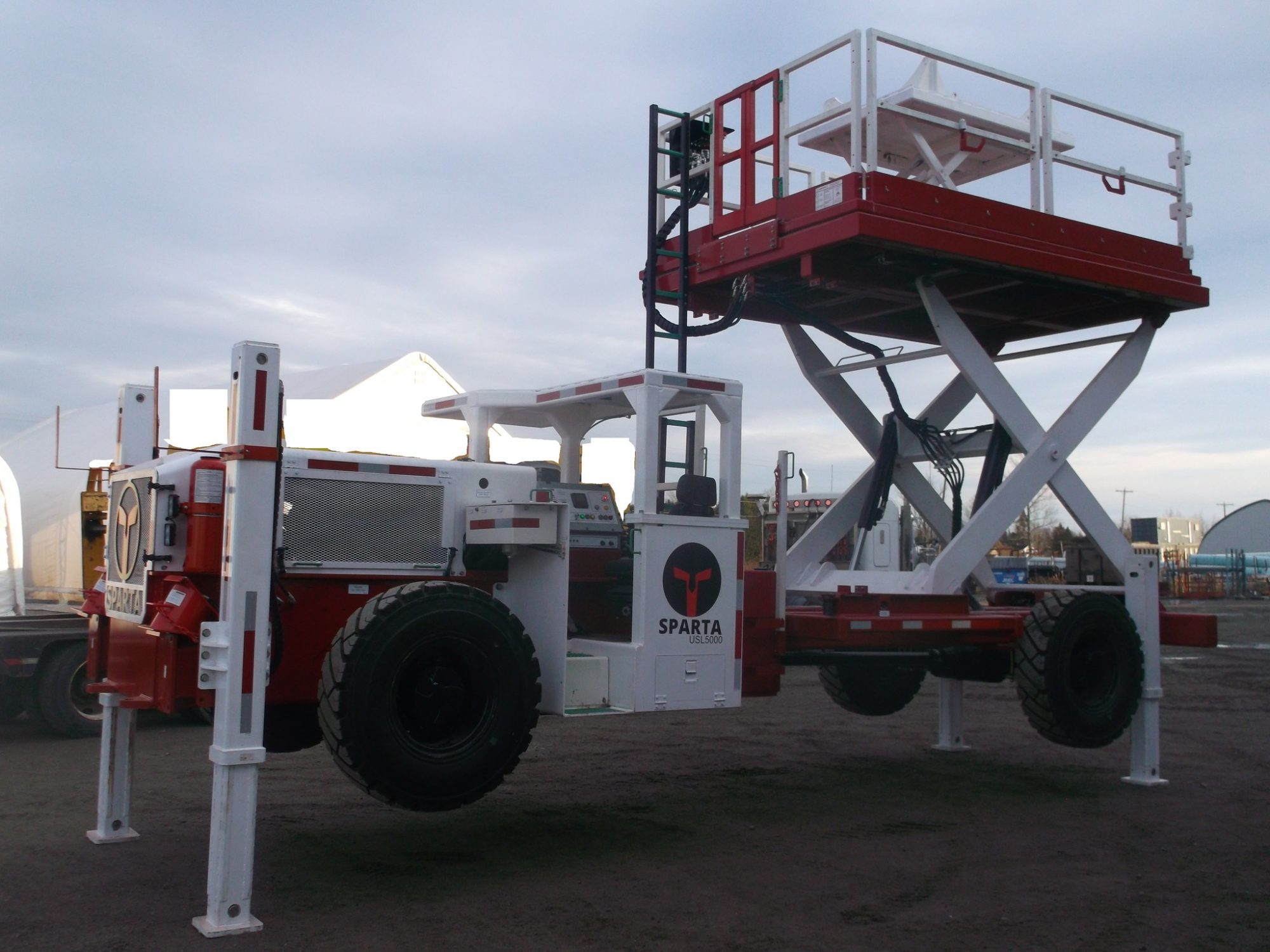
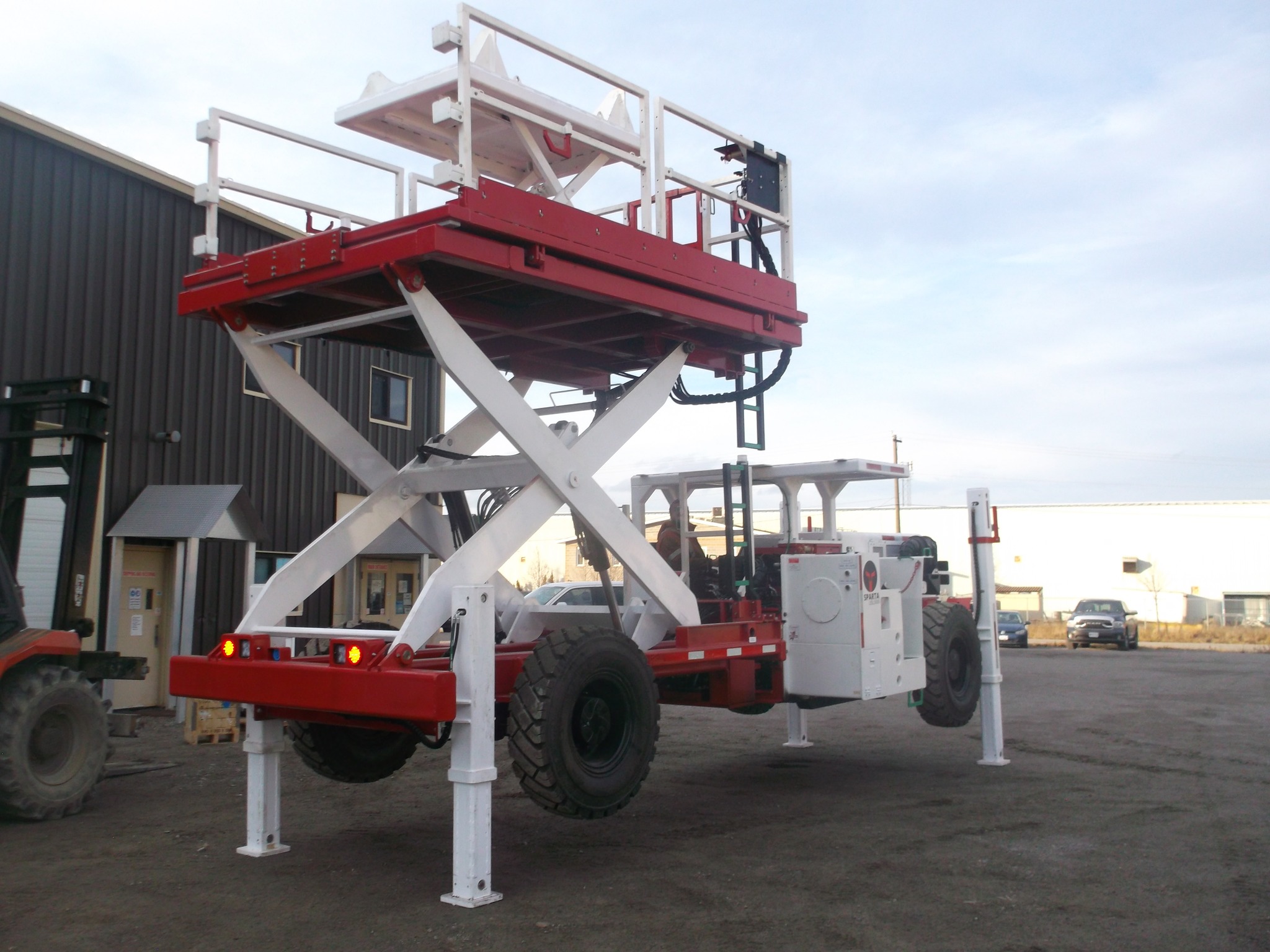
TES developed a custom configuration with a secondary scissor mechanism mounted on the main work deck. The arrangement provides two distinct lifting functions within one SPARTA underground utility vehicle.
EQUIPMENT CONFIGURATION
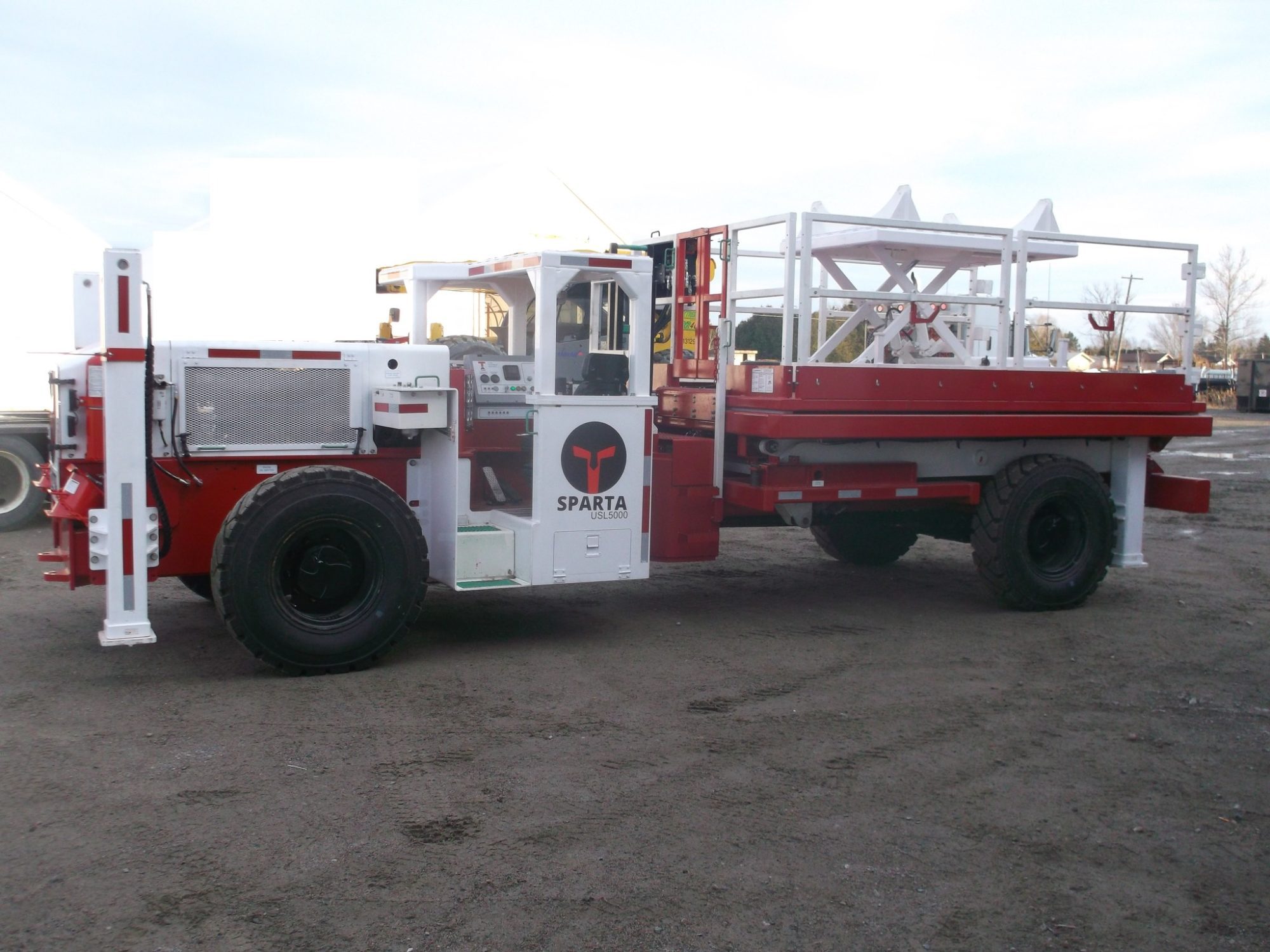
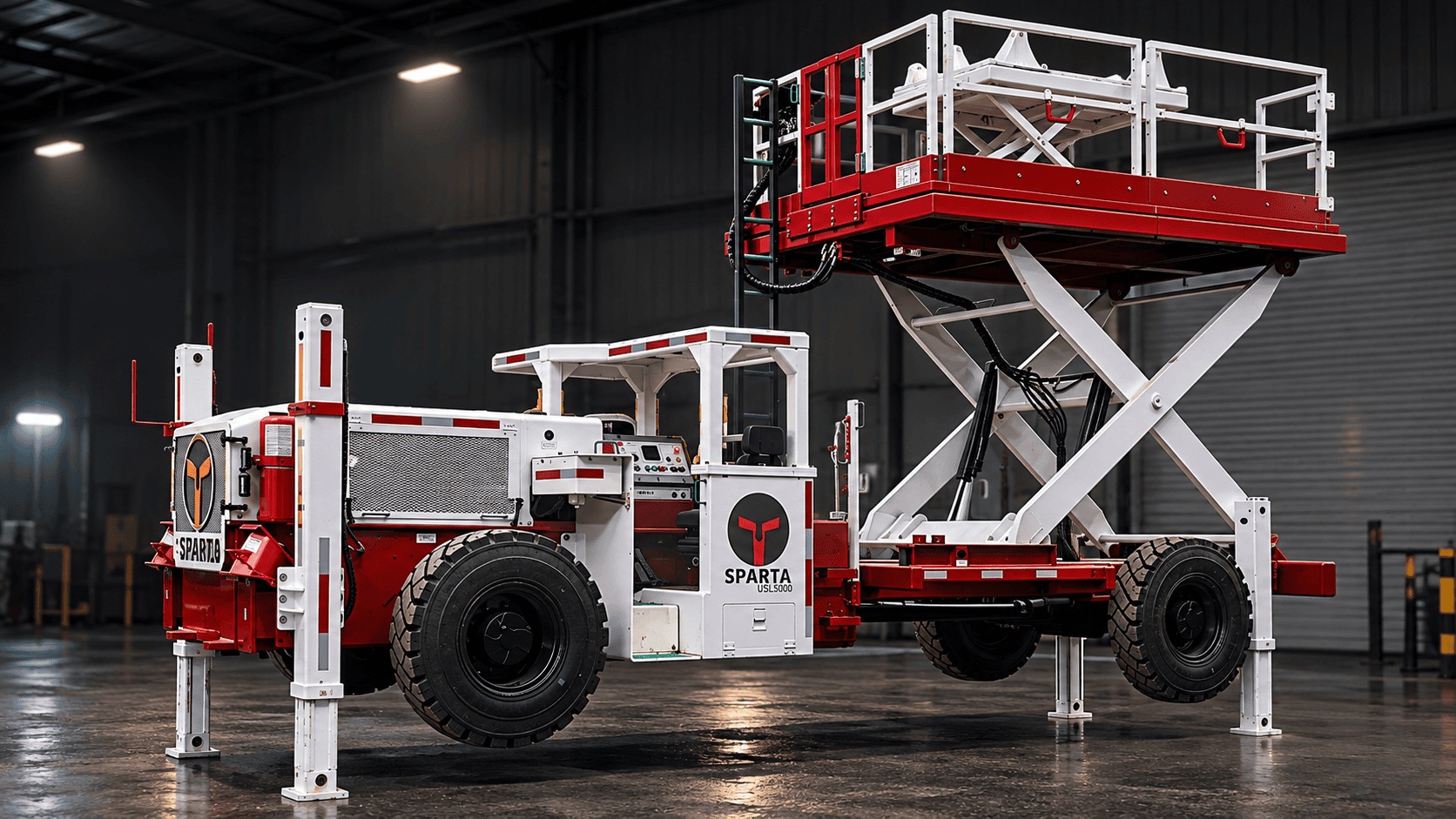
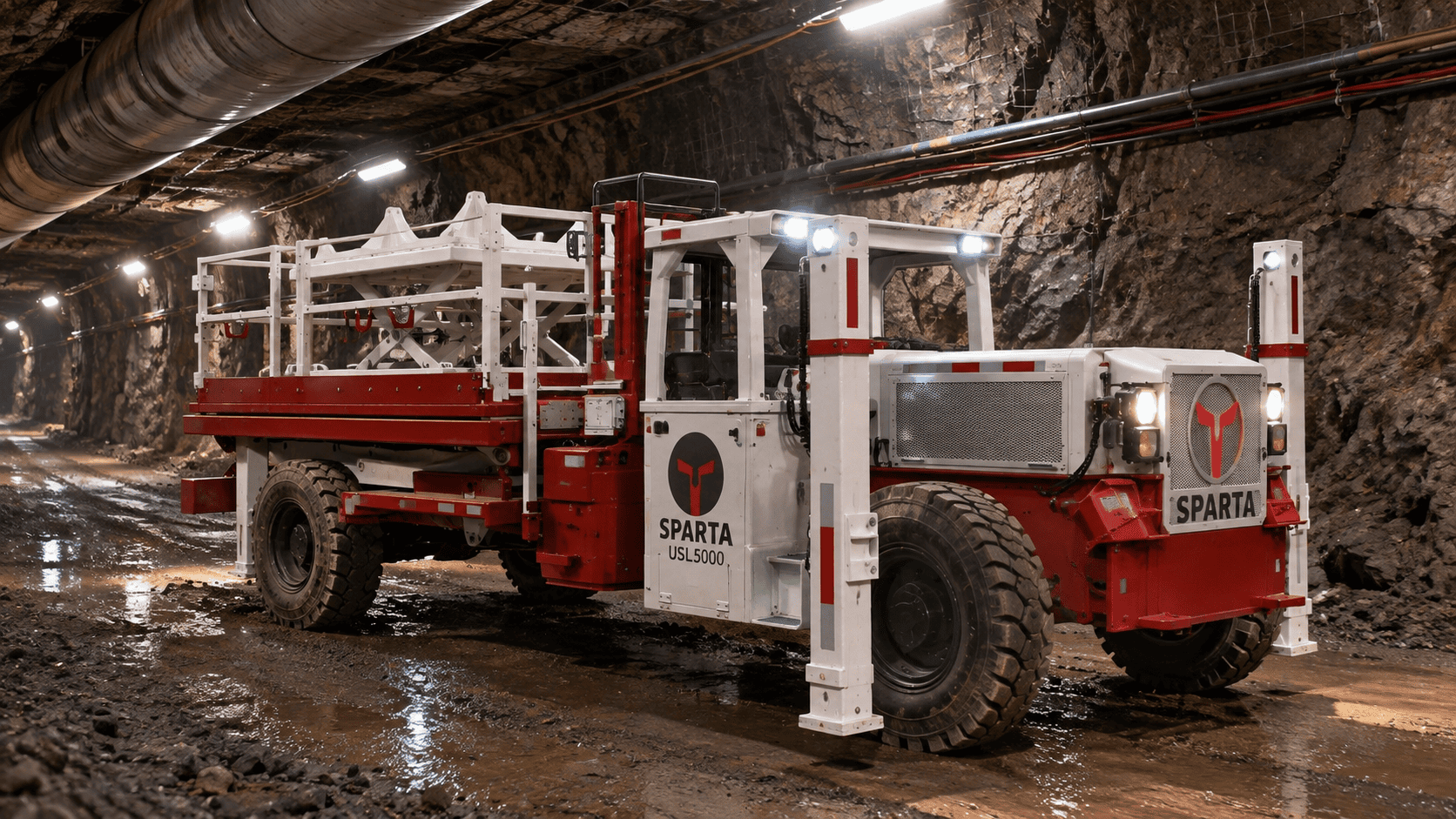
TES developed the Double Scissor using its SPARTA articulated carrier. The configuration integrates a primary elevating work platform, a smaller component-positioning lift mounted on the deck, and front and rear outriggers.
The two scissor assemblies provide separate functions. The main platform establishes the working elevation, while the secondary lift provides additional movement of the supported load.
EQUIPMENT ENGINEERING
INTEGRATED LIFTING SYSTEM AND LOAD LIMITS
The Double Scissor introduces a separate lifting function above the main work deck. This allows the supported component to move relative to the crew’s working position without requiring an equivalent change in the main platform elevation.
The TES specification identifies a main deck capacity of 2,268 kg (5,000 lb). The secondary lifting assembly and its supported load contribute to the total loading on that deck, together with personnel, tools and other materials.
The two lift ratings are not additive. Component weight, attachment mass, load position and stabilization must be assessed against the approved limits of the delivered configuration.
FAN AND PIPE INSTALLATION APPLICATIONS
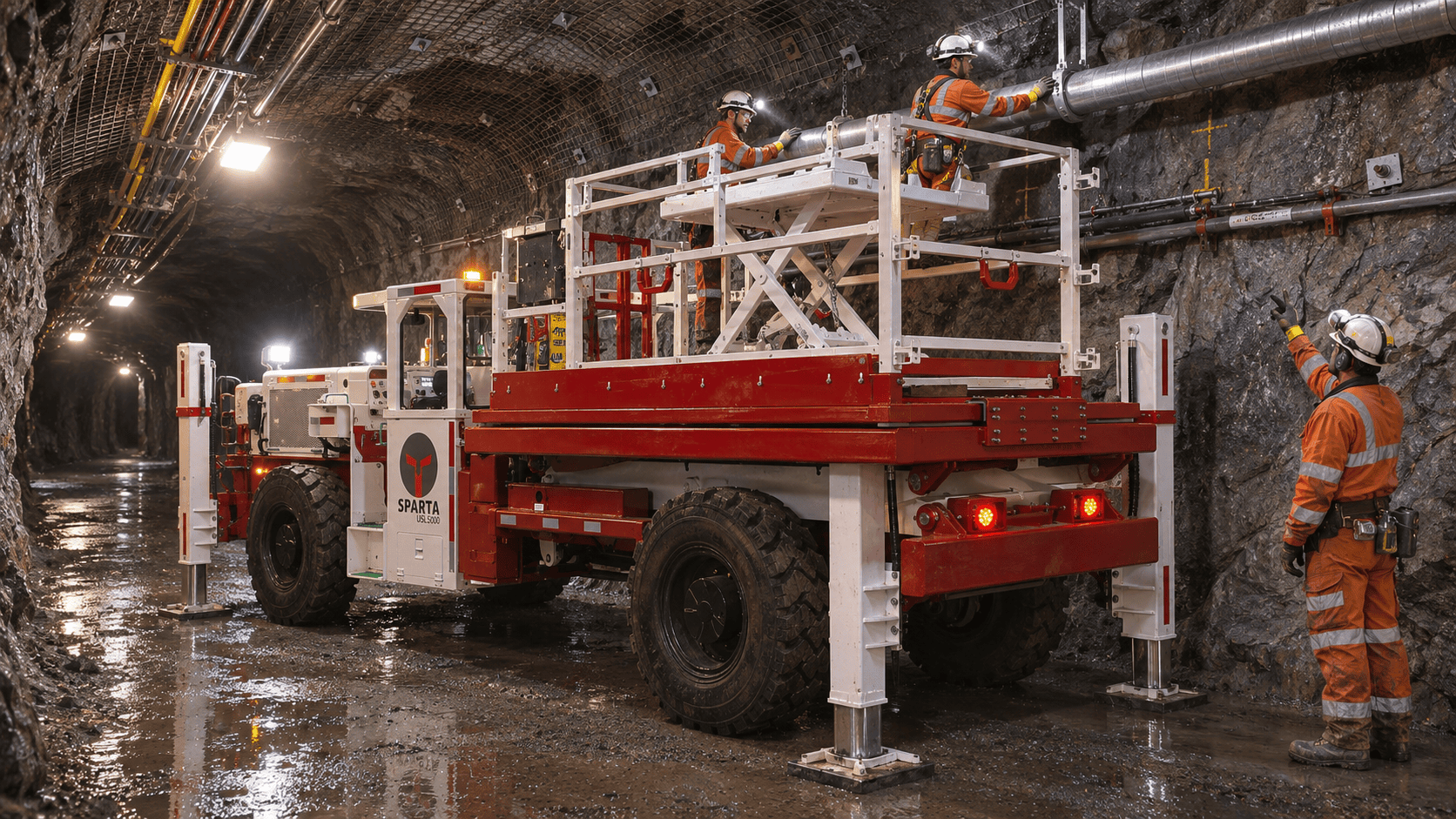
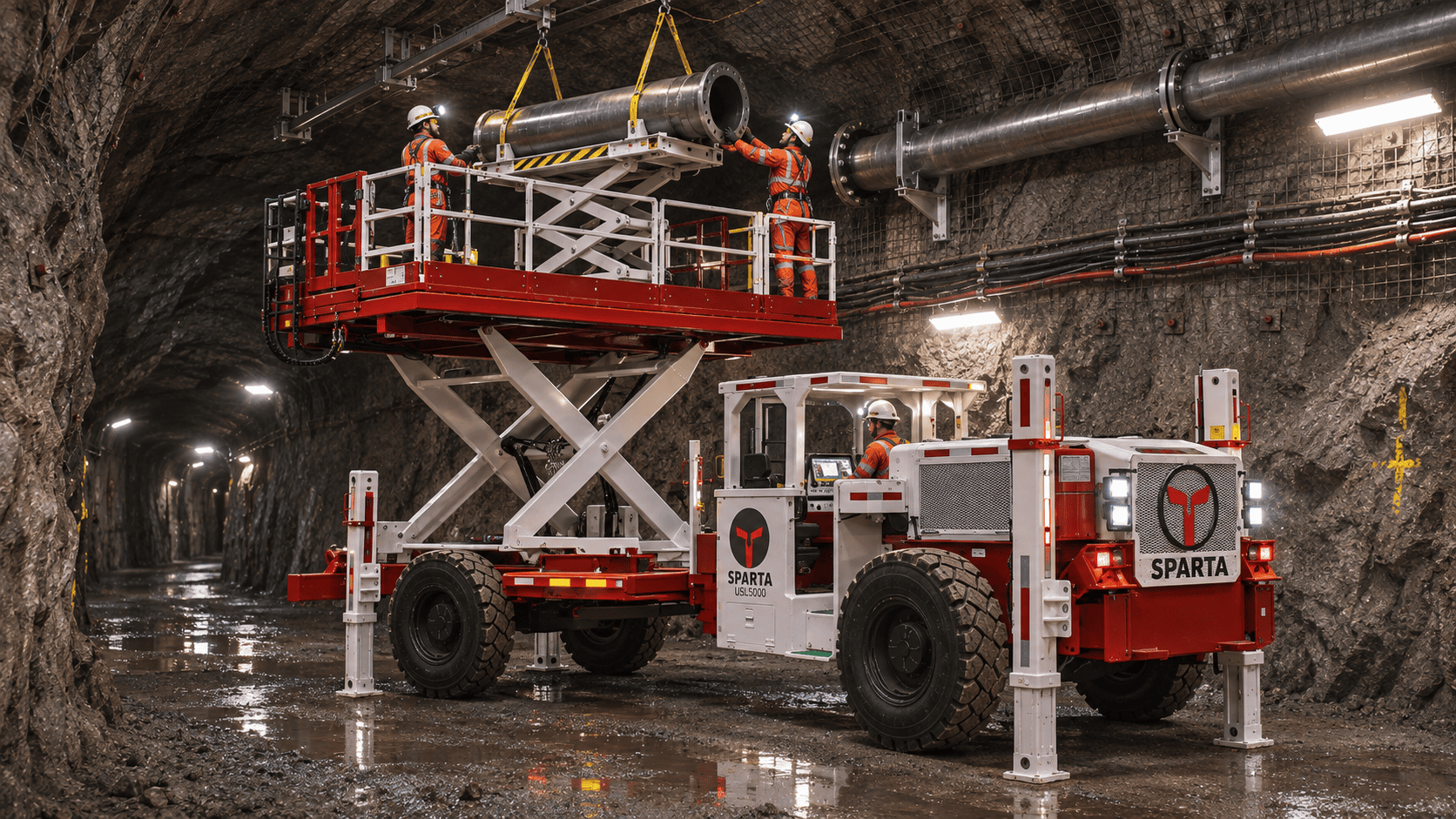
The Double Scissor was developed to address underground installation requirements involving elevated access and component positioning. TES engineering drawings illustrate a removable fan-handling arrangement, while the equipment specification also identifies pipe-handling provisions.
For ventilation fan installations, the lifting arrangement provides a means of supporting and adjusting the component while crews access its mounting points and connections. Pipe-handling applications introduce similar requirements for load support, positioning and alignment.
The completed custom build demonstrates how TES integrated component handling into an elevated work platform. Installation-time and operating-cost improvements have not been quantified.
ASSESSING THE CONFIGURATION FOR ANOTHER MINE
The relevant consideration is whether the equipment can provide the required elevated access while supporting and positioning the component within the available underground working space.
Component dimensions, lifting capacity, installation height, load positioning and stabilization must be assessed together. The suitability of the complete configuration depends on the intended installation task and the mine’s operating constraints.
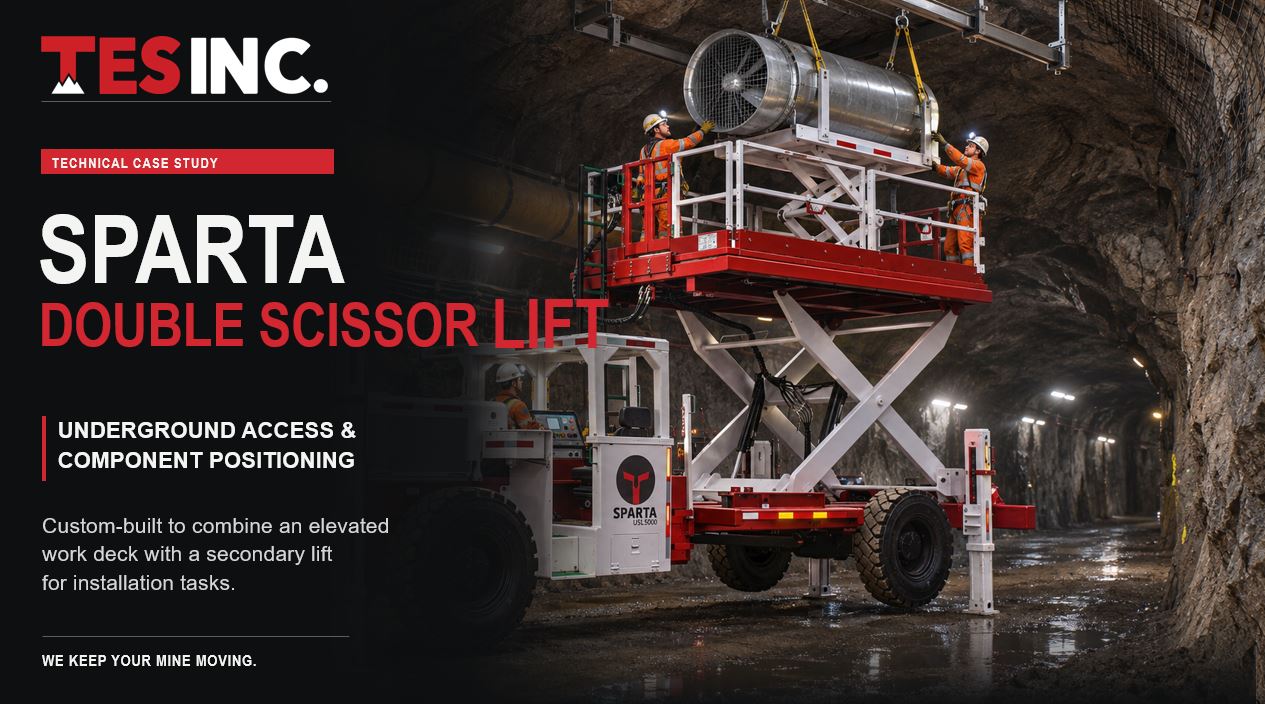
DOWNLOAD THE SPARTA DOUBLE SCISSOR LIFT CASE STUDY
Review the original mine requirement, custom lifting arrangement, equipment configuration and load considerations. The technical case study includes original TES equipment photographs, engineering drawings, platform specifications and the fan and pipe-handling applications that informed the design.
DISCUSS AN EQUIPMENT REQUIREMENT
Describe the material or equipment you need to move, the current handling arrangement and the underground access constraints. Include known load weights, dimensions and the functions the vehicle.